
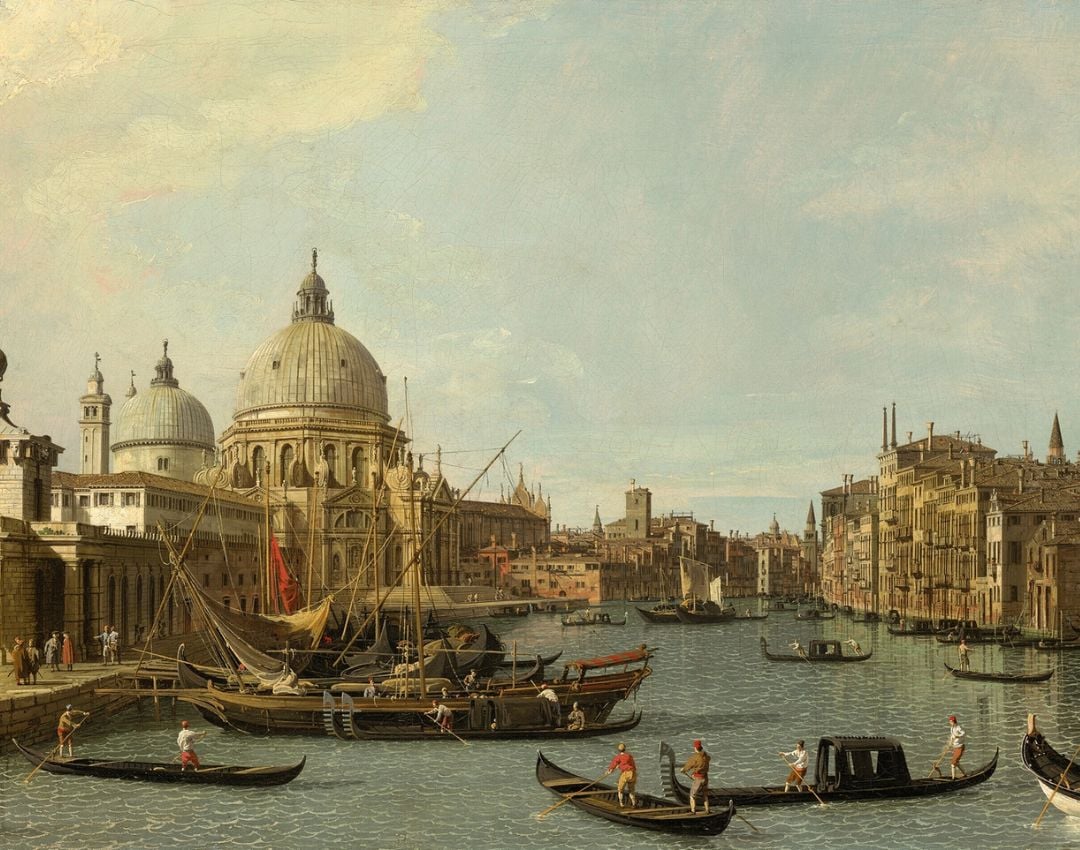

For artists who prefer to paint from observation — whether from reference photos or from life — it can be very easy to become tied down to painting things exactly as they appear. But in reality, you absolutely do not need to work that way. In fact, doing so can sometimes keep your work from developing into something truly great.

Don’t limit yourself to painting things exactly as they are. Instead, do what serves the painting best. At the end of the day, the design of your painting matters more than the literal subject itself. You are the composer of your painting and are responsible for creating the strongest possible composition. So allow yourself the freedom to move things around, remove things entirely, simplify, exaggerate, and change whatever needs changing.
Canaletto Painting from Reference – but changing it
There are many examples throughout art history of artists doing exactly this. And honestly, I think it can be helpful to see well known artists putting this into practice because, in a way it gives us “permission” to do the same in our own work.
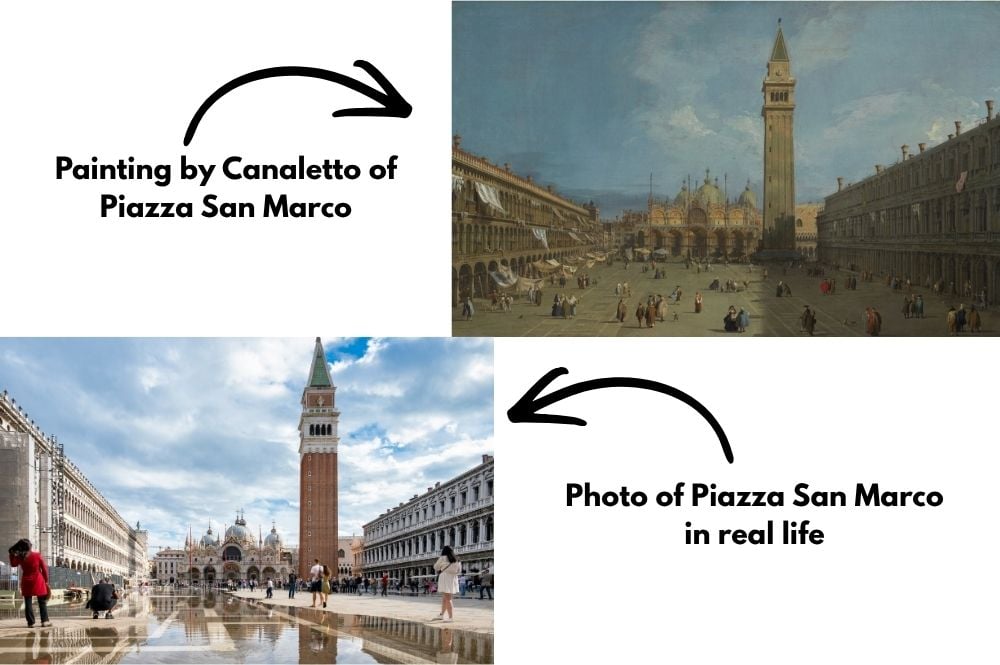
First, let’s look at Canaletto, who was well known for altering architecture to better suit his paintings. Historians have pointed out that he manipulated architecture and urban spaces in order to create more compelling images. He would shift buildings, widen canals, compress or expand distances, move monuments closer together, alter viewing angles, and simplify crowded spaces. All of these changes helped him create greater grandeur, stronger visual rhythm, and clearer, more impressive compositions.
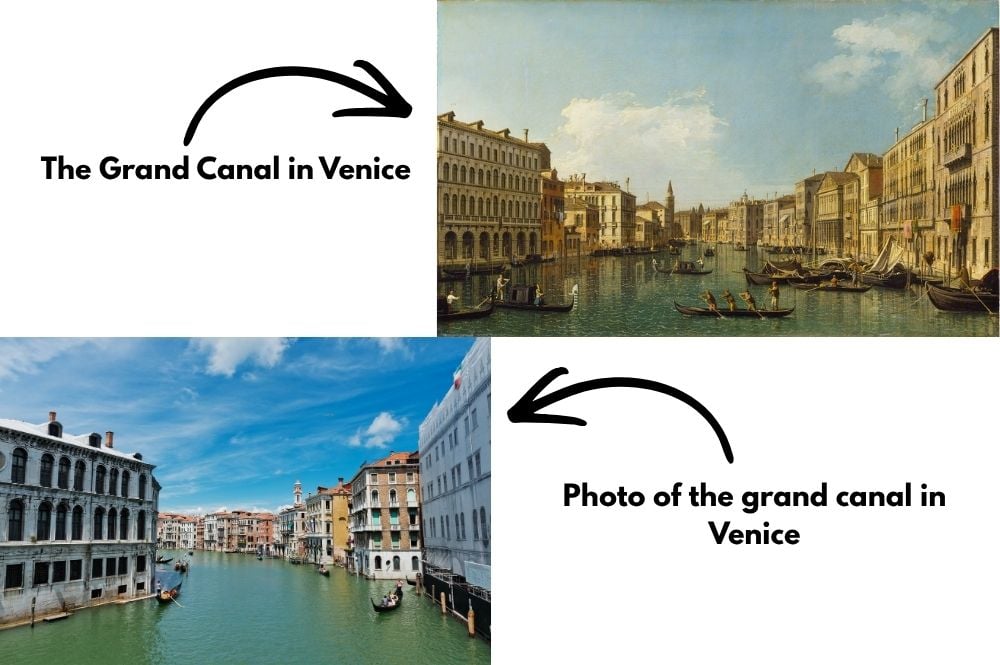
His paintings feel believable — but they are not strictly real. Even with something as permanent and seemingly fixed as architecture, Canaletto found the freedom to change reality in order to better serve the painting.
Inventing Designs for a Painting
Another artist who altered reality in his paintings was Johannes Vermeer. And this is especially fascinating because Vermeer’s paintings often feel more real than reality itself. Yet many art historians believe that the elegant marble floors seen in his interiors were inventions created by Vermeer rather than literal depictions of the rooms in front of him.
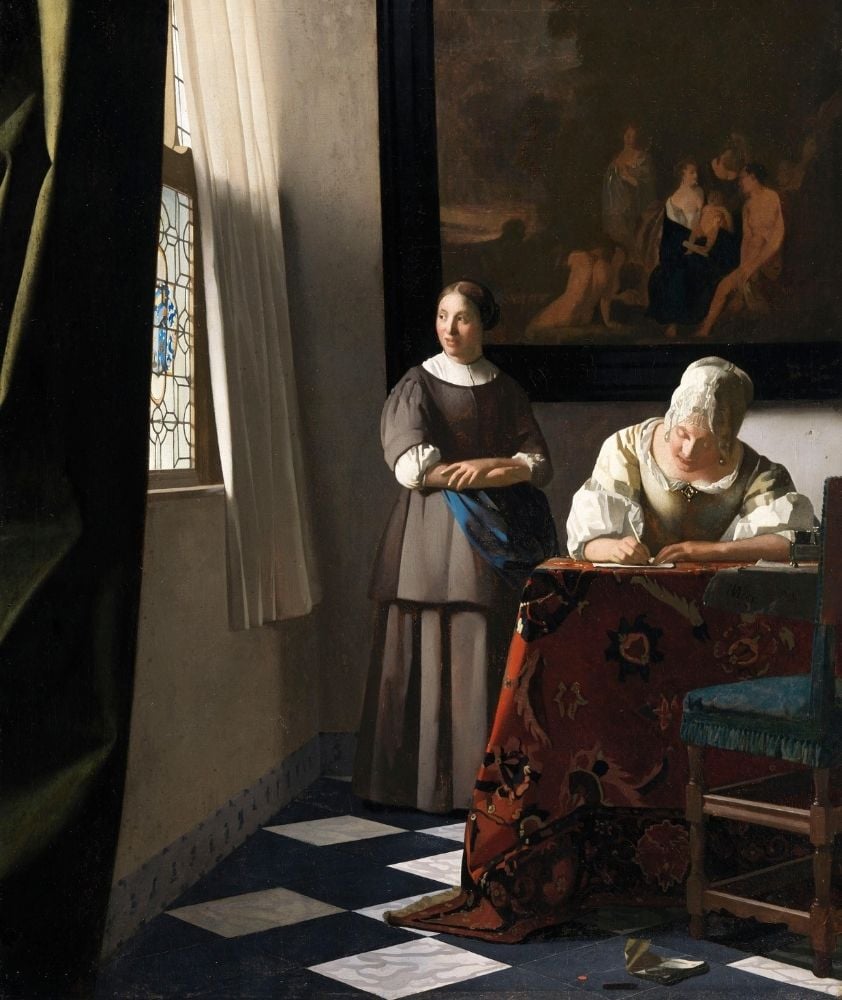
In Vermeer’s time, marble floors were found only in very wealthy and elite buildings. They would not have existed in modest homes like Vermeer’s. Not only were they extremely expensive, but marble floors would also have been impractical in Delft’s cold winters.
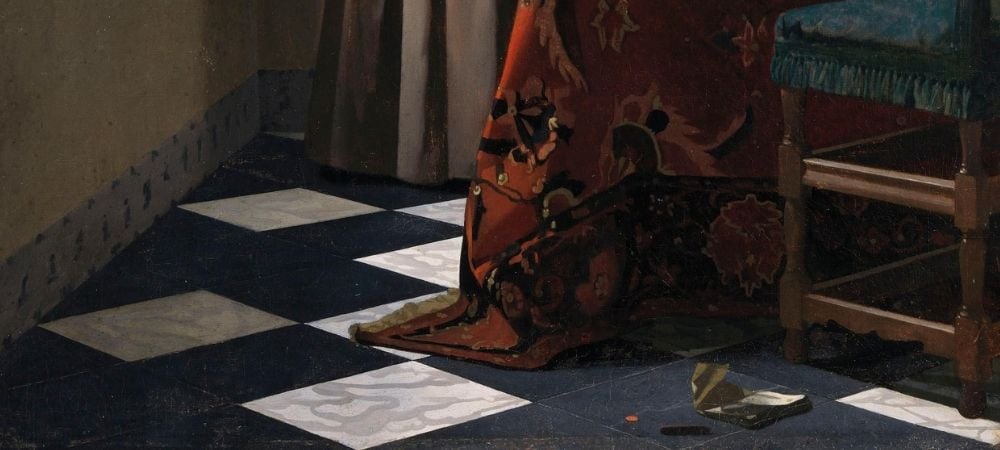
Because of this, historians believe Vermeer likely transformed simpler floors into grand marble ones within the painting itself. In other words, he visually altered reality in order to create a more refined and harmonious image. The floors also helped him establish beautiful perspective lines and create a greater sense of depth and structure within the composition.
Invented Designs in Contemporary Painting
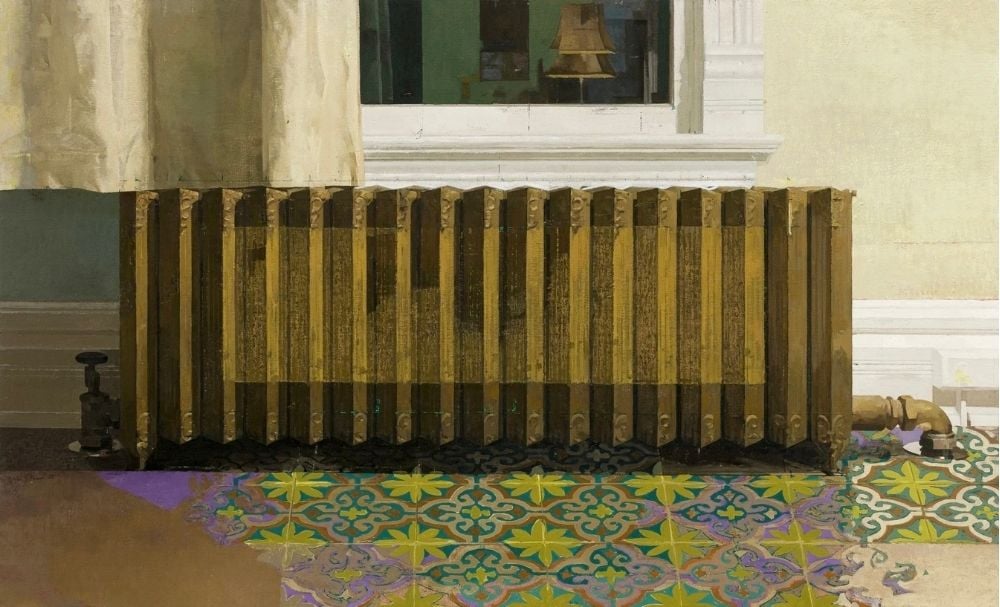
A more contemporary example of this kind of invention can be seen in the work of Zoey Frank. In some of her paintings, she invents patterns and visual elements that do not physically exist in her reference material. She creates them entirely on her own because they better serve the painting.
And that is an incredibly freeing idea.
Inventing the Lighting in Your Painting
If you want to create something different in your painting, you absolutely can. It doesn’t need to exist in real life for you to paint it. You are allowed to invent, rearrange, simplify, and transform things however you want. Painting is not about becoming a camera. It is about creating a compelling image.
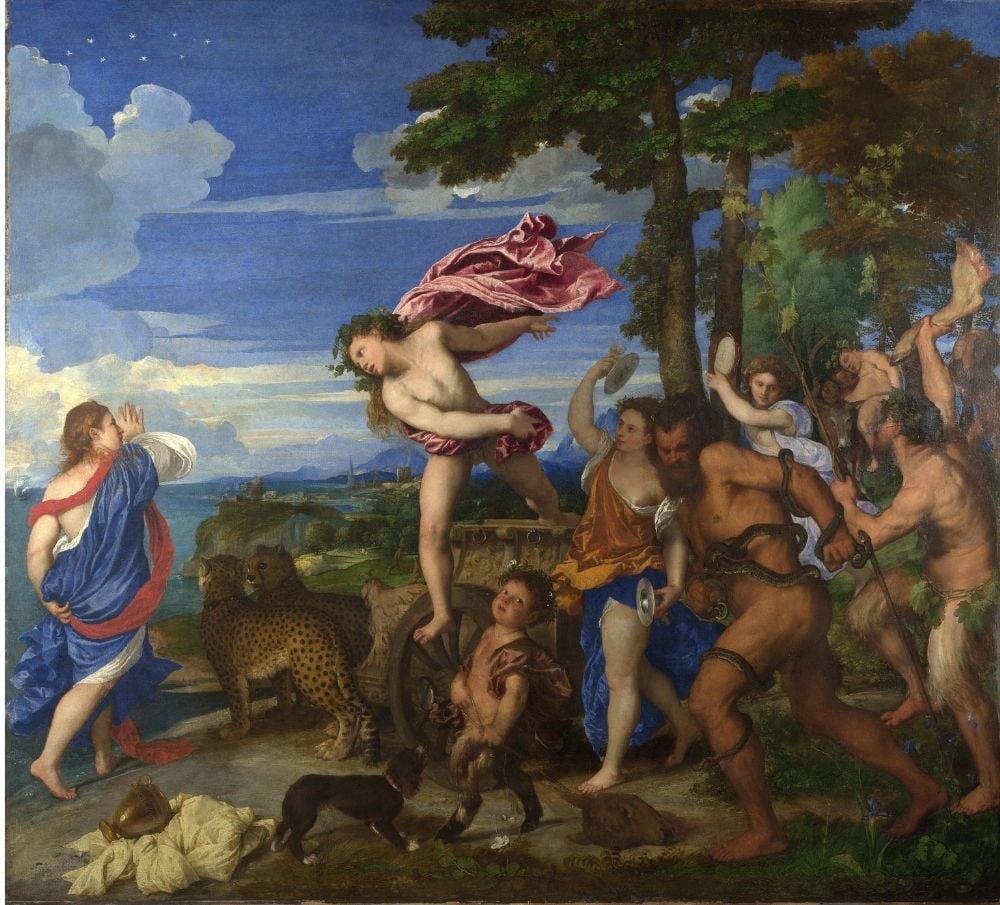
Our final example of this is Bacchus and Ariadne by Titian. The figures in this painting are lit with dramatic studio-like lighting, yet they are placed within an outdoor setting. Titian obviously did not have models posing outside in some idyllic landscape exactly as we see it in the final painting. Instead, he constructed the scene himself — combining invented outdoor settings with controlled studio lighting on the figures.
In other words, he constructed the painting according to what best served the final image rather than remaining completely faithful to literal reality.
And ultimately, that is what great painters throughout history have always done.


2 thoughts on “You Don’t Have to Paint Exactly What You See”
Very interesting article. I really enjoyed reading this and learning some of the history behind the paintings.
Thank you for your kind words! So glad that you enjoyed it 🙏