
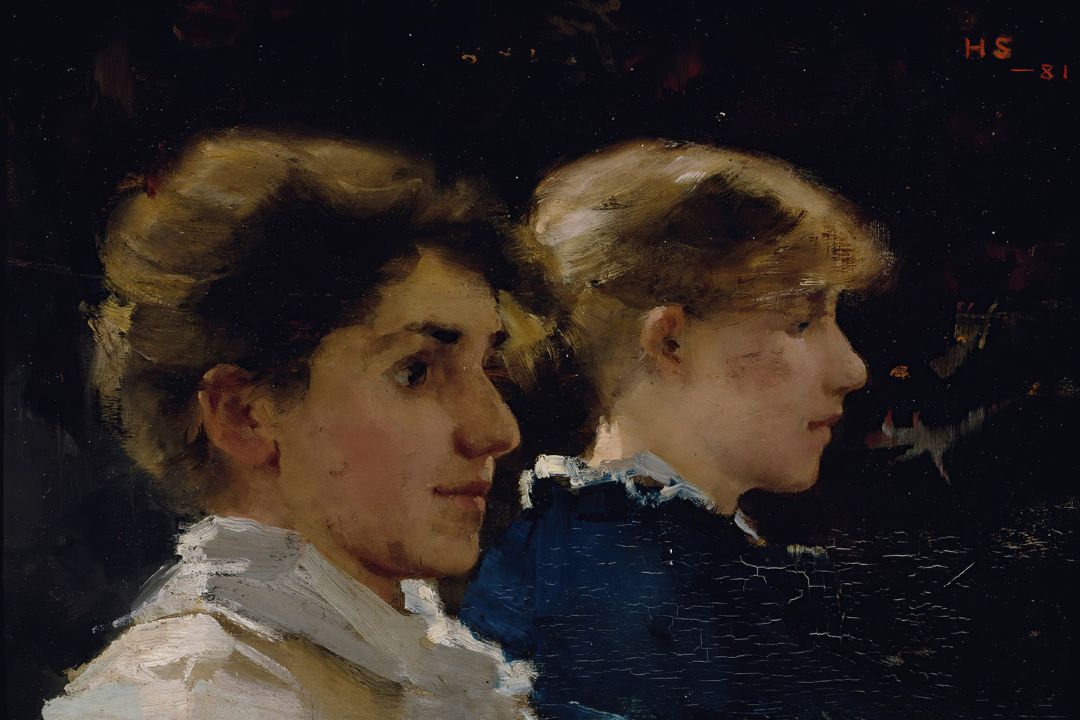

One of the most powerful (and often overlooked) tools in a painter’s development isn’t a brush, medium, or a technique. It’s curiosity.
We tend to associate artistic growth with discipline, practice, or talent. And while those all play a role, the driving force behind continual improvement—is a relentless desire to understand. Curiosity in art transforms painting from a mechanical act into a living, breathing exploration.
Curiosity Makes You Look Closer
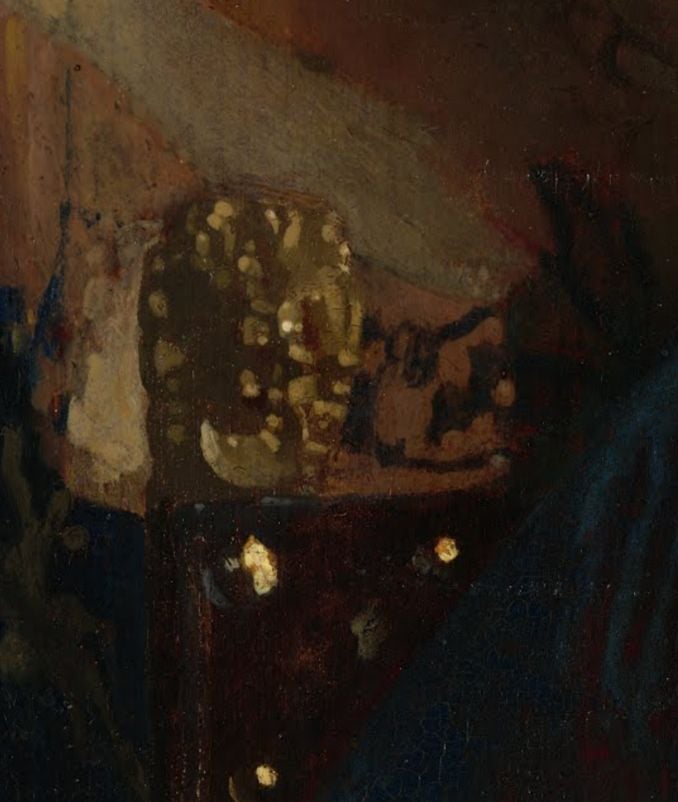
At its core, painting is an act of observation. The better we see, the better we paint. And curiosity sharpens our eyes.
A curious painter isn’t satisfied with just identifying that a tree is green. They want to know: what kind of green? Is it leaning more yellow or blue? How dark is it compared to the sky? Is it catching warm or cool light? You never settle for just “it is green”.
This level of attention—driven by curiosity—is what turns vague impressions into deliberate choices. When you ask, “What kind of color is that?” or “Where does that shape turn?” you start building a visual vocabulary that can only be developed through firsthand investigation.
Curiosity fuels the essential skill of visual analysis.
Curiosity Builds Visual Memory
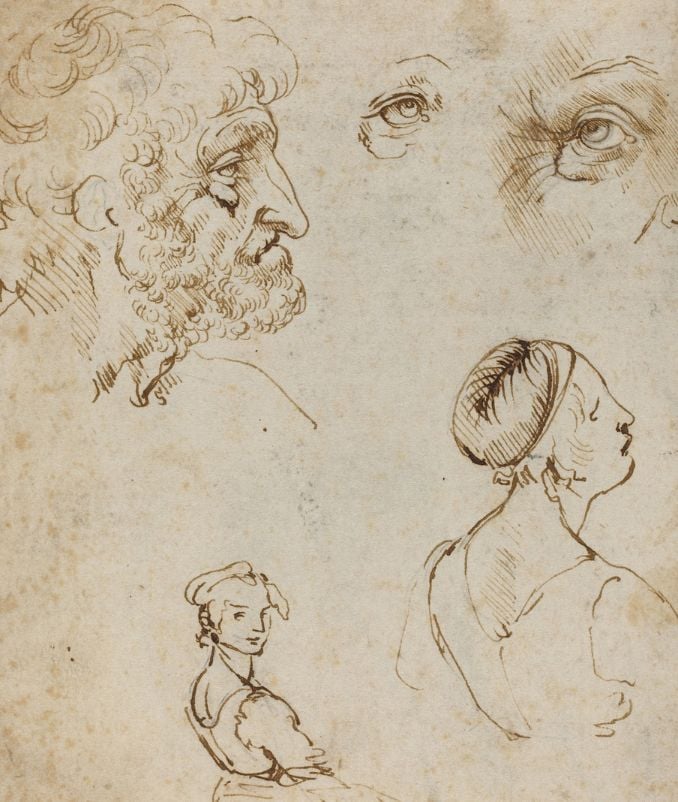
Repeatedly asking yourself these questions does more than just help in the moment—it gradually builds your ability to remember and predict visual phenomena. The more you study how light behaves, how shadows soften at the edges, how complementary colors vibrate against each other, the more you know what to look for.
Over time, this curiosity develops into a kind of inner reference library—a memory of visual experiences that you can call upon even when painting from imagination or memory. But it starts with asking questions.
Curiosity Drives Composition and Design
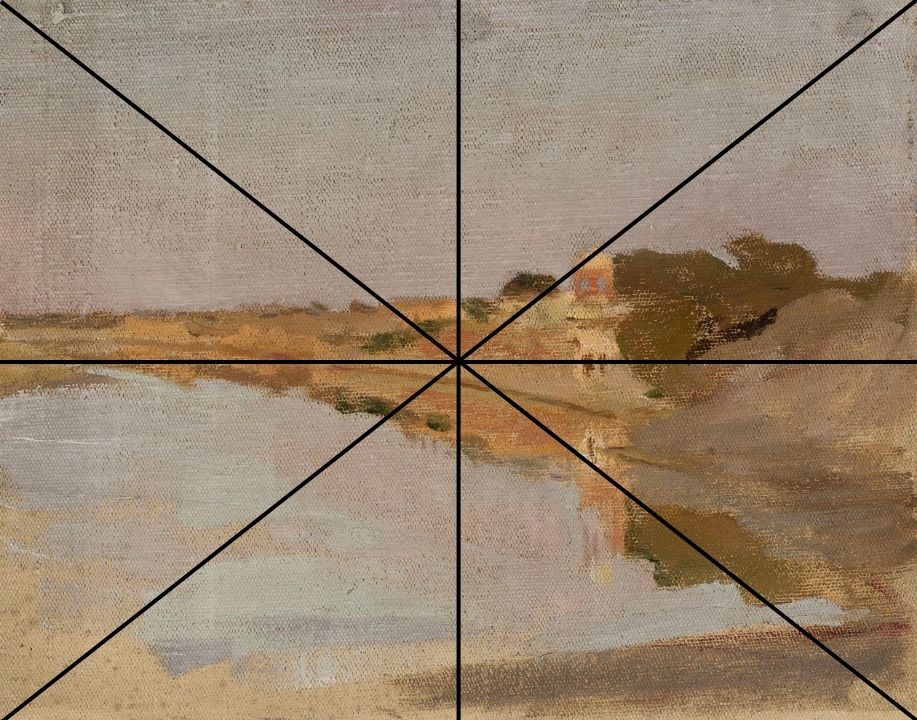
A good painting isn’t just about rendering—it’s about design. You can have an incredibly well-executed painting, but if the composition is dull then the painting will never be compelling. And curiosity plays a vital role here too.
Ask yourself: What would happen if I moved this object slightly to the left? Would the composition be stronger if I reduced this area to a large shape of shadow? Is this rhythm of lights and darks dynamic enough? Curiosity doesn’t just help you observe—it helps you make better decisions.
Painters who grow are painters who experiment. And experimentation is the natural expression of curiosity in art.
Curiosity in Art Helps You Stay Out of Ruts
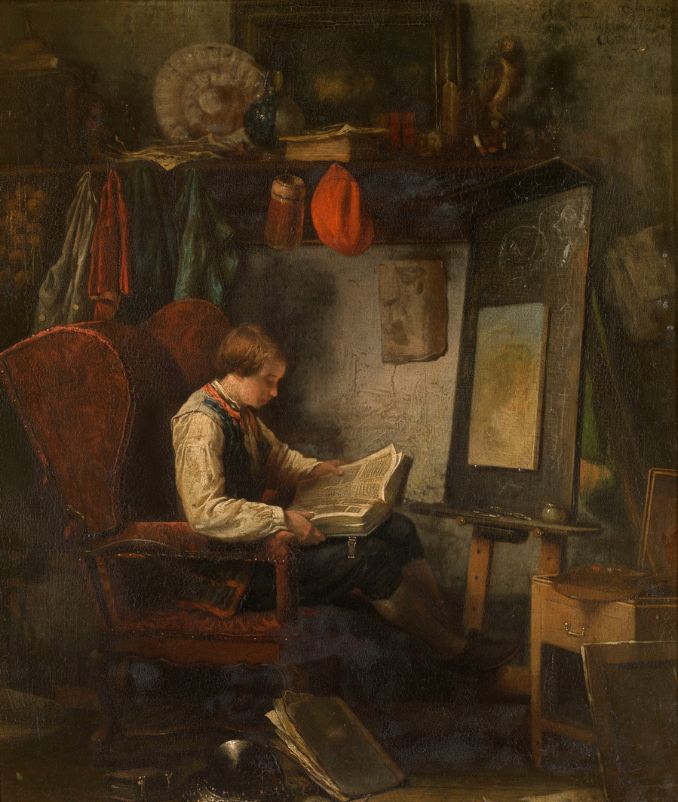
One of the quiet dangers for developing artists is falling into autopilot. You figure out a few techniques that work, a couple of color combinations that are reliable, and suddenly you’re painting by habit.
But curiosity disrupts that. You can ask yourself: What haven’t I tried yet? What happens if I push this further?
Even if the answers lead to failure, that failure often becomes your teacher. Curiosity leads you beyond comfort and into growth.
How to Nurture Curiosity in Your Practice
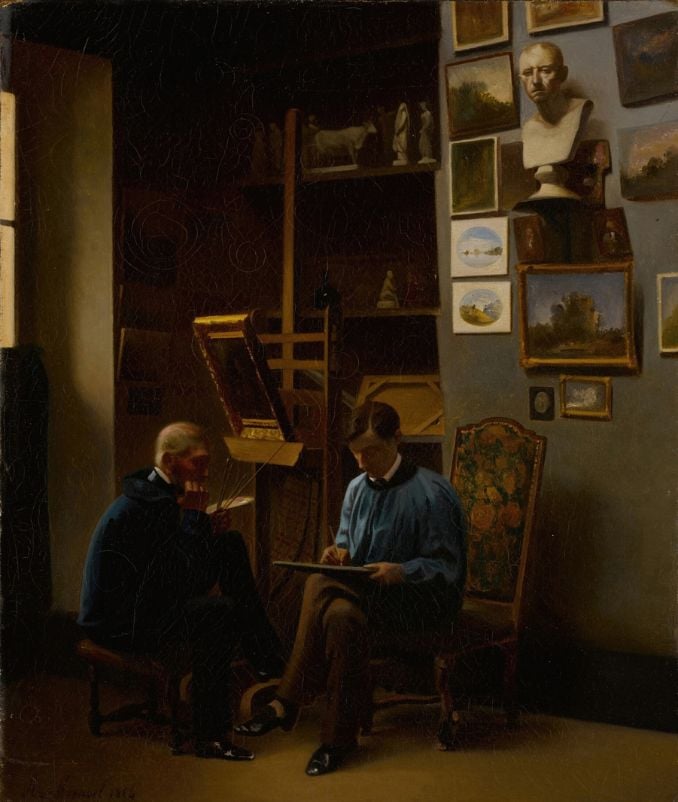
As humans we are naturally curious. However, there is always room to develop more curiosity – especially when it comes to painting. As you encourage greater curiosity in art and yourself you will find that you will naturally start to deepen your level of engagement. Here are a few ways to bring more curiosity into your painting:
- Slow down: Give yourself time to really observe before you begin. It can be easy to get into a mode where we feel the need to be productive and make a lot of work. However, if this is the mindset you are coming from, then the work you do might be great in quantity but it won’t be great in quality.
- Ask questions constantly: What am I really seeing? How does this compare to that? Painting is really about constantly asking yourself questions about what you are seeing – from small nuanced color changes to large shapes.
- Take visual notes: Use a sketchbook not just to draw, but to explore visual questions. It is good to also approach your work not from a standpoint of producing something. But simply to explore and enjoy the process.
- Study from life and from masterworks: When doing master copy studies you can engage with the curiosity of others and learn from what they did to increase your own level of learning. Also, always study from life – it provides endless resources to encourage your curiosity.
- Embrace not knowing: Painting isn’t about having the answers—it’s about searching for them. Questions are more interesting than answers.
Curiosity in art is what keeps painting alive and evolving. Love to hear your thoughts and what’s been intriguing you lately in your exploration… Just drop me a note in the comments below!
Liked this? Save the article to your favorite Pinterest Board.

28 thoughts on “Why Curiosity in Art Matters More Than You Think”
Elisabeth,
Good morning…thankfully for your articles I’m inspired to continue my artistic journey. Your area of dominate influence is impressive and valued. Thanks again for shariing the gift.
Thank you Jess! So glad to hear that my articles have inspired you! This is always what I hope for my articles to do. Thank you for sharing.
Hi Elisabeth glad you touching on this, i always thought that observation was very important aspect before attempting a painting. but i think being curious as well brings the whole process to a new level, thank you .
,
Hi Niel – thank you so much for your words – am glad you enjoyed this article
Hi Elisabeth
I’m only 5 weeks into my recently started painting journey. According to friends and family I’m at a level that took some of them years to achieve. To me art is personal, it’s not a competition. Many times my curiosity gets the best of me, especially when it gets to colors and my ability to look at something random such as a rock or piece of wood and see something alive to create from it. I have at times thought my intense curiosity to be a bad thing, but reading your article makes me feel so much at peace and I only want to embrace it more. The more curious I am, the more unique my art become. Thank you so much
Hi! Thats so wonderful you are making such speedy progress in painting. Art is definitely not a competition… Am so glad this article helped you to embrace your curiosity more! Thank you for sharing that – you are so welcome 🙂
I am so curious…… But that takes me to continue investigating instead of picking the brushes and paint.
After a try I frequently find myself looking for the and go through all the minutes or hours spended ang guessing where I dominated the process and where I just followed the picture without thinking and made a mess that I don’t want to look for.
I can’t continue just wondering for ever.
haha yes sometimes curiosity can take a turn like that. The trick is to direct ones curiosity to take place physically – while using art material tools and engage that curiosity with your hands. It might take a little while to direct it that way but it is very possible!
Love your articles, Elizabeth. One of the things I’m fascinated by at the moment is when a saturated colour is put in a large shape it is more interesting when it is full of differing shades of the dominating colour , ie red/brown, red/blue, red/orange, red/green than just a solid saturated red.
Thank you so much for your kind words Gaye! Ah yes I agree with you on that!
Where did you get those pictures from, there are no captions?
Thank you for the article.
God bless.
Joe
Hi Joe! I get many of images of paintings from artvee – which shares a lot of art that is in the public domain – all of them in this article are from there. I have captions beneath each image but unfortunately I forgot to make note of the artists of the last two, but will rectify that! Thank you for pointing out.
It is good to reed this article, it gives me a direction in thoughts as I intend to paint better,
I shall reed again some times, thank you!
Am so glad to hear that Valentin! Thank you for sharing
I have been searching for a tree to paint which acts as a vocal point to lead into the area, where I live the Warrumbungles, for quite some time. At the moment I can’t see the tree for the forest. So will keep looking for the elusive “tree”, and I should be richer for it.
Thanks Elisabeth for your inspiration.
So good to hear from you Warren! I hope you are well. Thank you so much for sharing – I do hope that you will find the perfect tree to act as a focal point. I am sure it will come to you! Hope you are able to spend lots of time painting these days!
Yes, I find myself constantly studying nature to try to understand what I actually see…like the way the edges of trees can appear much lighter, which is useful to know when painting green trees or bushes that are in front of and behind each other. Or how there are dark chunks of colour on cliffs. Trying to understand the sea is so much harder because it won’t stand still to let you observe.
I completely agree with you about studying the sea. Though it is mesmerizing to watch. I have found what is helpful is to understand the “basics” of what is happening visually with water. This helps then to paint it as one can recreate it in a more convincing way – and then painting “imaginary” water paintings. They are quite fun to do! That is so great that you find yourself constantly studying nature like that. I can imagine living in Ireland you get lots of opportunity to study the chunks of color on cliffs! So good to hear from you Gillian and thank you for sharing!
I always appreciate your articles thank you 🙏
So glad you enjoy them Arlette!
Don’t you find that it takes more time to plan an interesting composition than to actually paint it. I do. Maintaining my interest thru to the end can be a major problem unless I keep my goal in mind.
Oh yes definitely… Planning a good composition can sometimes take quite a lot of time. And its also important to find something that really interests and excites you to the point that it will sustain your interest through to the end – otherwise yes maintaining interest can be an issue.
You are completely right Elisabeth. Stopping being curious is stopping being an artist.
Thank you for sharing so much information with us.
Mara Galvao
maragalvao.com
Yes! Absolutely – thank you for reading. Am very glad you enjoyed this.
Thank you !
You are very welcome!
Very interesting, I shall take it on board – thank you.
You are so welcome!