


Great painters never stop drawing while they paint. Degas, for example, would re-draw the positions of hands, heads, and limbs again and again — sometimes over the course of years. He used charcoal, chalk, and even tracing paper directly on top of his paintings to continually refine his proportions. He adored color — but he knew that structure has to come first. Painting is always drawing, just in a different way.
Even the most expressive painterly areas in his work sit on top of carefully corrected drawing. Structure came first — color came second.
Why drawing is the foundation of painting
It is too often stated that you can paint without any drawing. Every decision that one makes when applying paint to canvas is informed by drawing skills. Measuring and figuring out proportions is the bedrock that makes a painting work. When the proportions in a painting are worked out then that allows everything else in the painting to fall into place.

For example, if an eye is just a little too high, the whole likeness collapses. But moving it just a few millimeters — a drawing correction — suddenly everything clicks into place. You could be amazing with color and value – but if your proportions are off and you cannot measure then the painting won’t work out so well.
Even though drawing is often the biggest issue in a painting… it’s also the easiest one to fix. It just requires knowledge of foundational drawing skills and the willingness and patience to be persistent.
Most Painting Problems = Drawing Problems
A big thing that very often separates amateur paintings from very good ones is the lack of drawing. Most issues that might be in a painting can be easily fixed and adjusted with drawing. It is one of the most overlooked solutions for massively improving a painting.

We often think of measuring and checking proportions as something that only happens in pencil on paper. But once you start painting, there is even more to keep track of — color shapes, value areas, angles, and distances between forms. Everything becomes visually noisier.
That’s exactly why drawing becomes more essential inside a painting — it keeps the structure in place while the painting gets more complex.
How to Keep Drawing While Painting
To keep drawing while painting, you simply carry the same tools and habits of a drawing practice into the painting process. You continue to measure, compare, and adjust proportions all the way through.
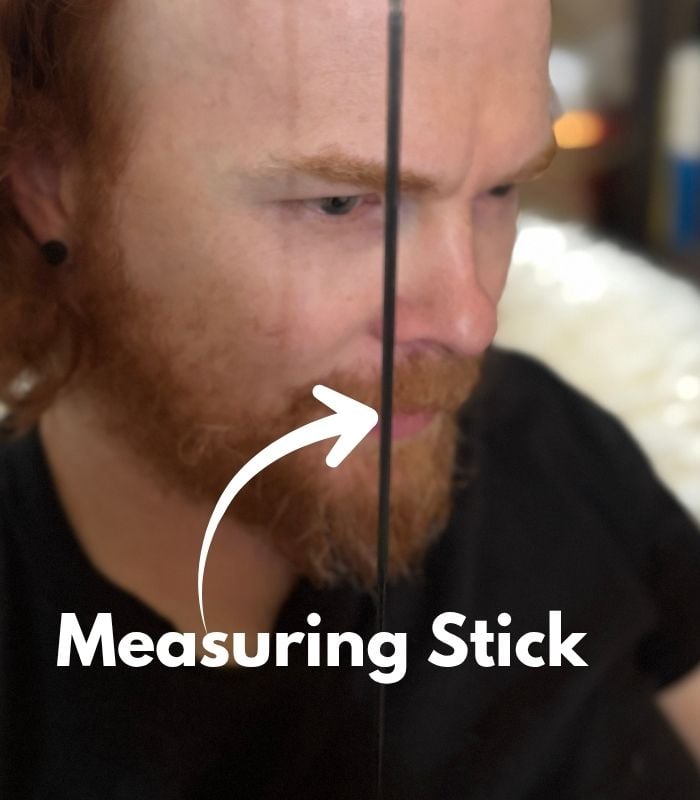
Personally, I use more or less the same measuring tools while painting as I do when drawing.
A thin straight stick is perfect for checking alignment, angles, and comparative sizes — allowing you to get the right ratio of one form to another. Such a simple tool can help you achieve incredibly accurate proportions.
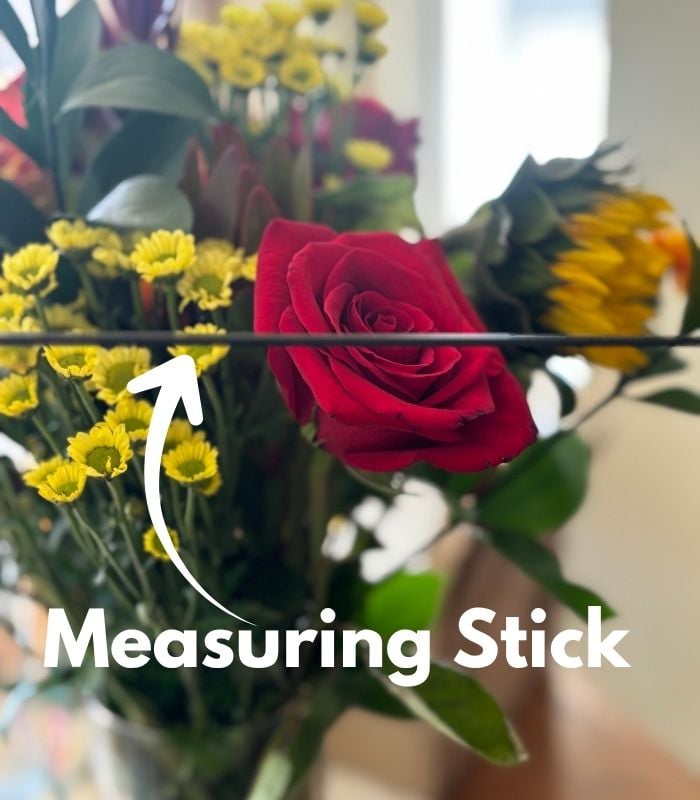
And remember — your brush and palette knife can be measuring tools as well. Use the length the same way you would use a pencil: to judge angles and distances right from your easel.
It’s Not About Rigidity — It’s About Freedom
All that said, constantly drawing throughout the painting process is not about being stiff or overly exacting. We often equate precise drawing with inflexibility — as if loose brushwork would no longer be allowed.

But the truth is the opposite:
Good drawing gives you freedom.
You no longer have to timidly guess your way around the canvas. You can make bold decisions because you are grounded in accurate relationships. When drawing supports your painting, you can finally paint with confidence.
Free video lesson coming up!
I have a new video lesson coming out this Friday morning (November 7th) that will show you exactly how to apply drawing inside your brushwork — and why it is so essential for creating strong, confident paintings.
👉 Make sure to sign up for the free video lesson here to be notified so you don’t miss it!

12 thoughts on “Why Great Painters Never Stop Drawing – Even with a Brush”
How can I get the fundamental drawing course. I saw free course. I want to sign up for the full course
Hi Kate! Thank you for your interest – you can get the workshop here 🙂 https://artstudiolife.lpages.co/dfp-workshop/
Hi Elizabeth,
Looking forward to seeing what you have for us. I sometimes struggle with my drawings.
Regards
Alma
Hi Alma, Thank you! I have a free video lesson – if you haven’t seen it yet you can get access to it here – https://artstudiolife.lpages.co/drawing-lesson-sign-up/ am offering a workshop – if interested you can check it out here! Beyond the free video lesson I am offering a workshop – you can learn more about there here 🙂 https://artstudiolife.lpages.co/dfp-workshop/
Skall bli spännande att få ta del av dina tips
Thank you! I hope you got to watch the free video lesson 🙂
Thanks a lot! It’s so useful to follow these steps. A good drawing always support the painting. Sometimes it seems boring or difficult to start with a precise drawing, but later -you are right- you loose your freedom as you are getting lost to unknown paths.
It is very true – it really can seem tedious at first but when you put an emphasis on drawing it opens up your work to so many more possibilities. And, the drawing aspect of painting becomes more intuitive and part of the painting process over time – so less of a boring tedious chore!
Hi Elisabeth, looking forward to you lesson.
Regards,
Richard
Thank you Richard – I am looking forward to sharing it soon!
Looking forward to your new video regarding painting first – thank you Elisabeth
You are so welcome – its coming out soon!