


Many historians agree that the Tudors would not be nearly as famous as they are without the paintings of Hans Holbein the Younger. Originally from Bavaria, he eventually found himself at King Henry VIII’s court through a series of circumstances.
When you look at a portrait by Hans Holbein the Younger, it doesn’t feel like you’re simply looking at a painting. It feels as though a real person is standing before you. There is a presence in his work that is difficult to explain—but immediately felt.
That is part of what makes Holbein such an important painter to study. His portraits are not merely technically impressive or historically significant—they feel alive. His sitters do not just resemble themselves; they feel inhabited, alert, and deeply convincing.
And that sense of life was not accidental.
It came from a deep understanding of structure, preparation, color, value, and restraint. Holbein’s paintings show us what can happen when a painter truly understands what they are doing.
Don’t Underestimate Thoughtful Preparation
One of the clearest lessons painters can learn from Holbein is not to underestimate the importance of thoughtful preparation. Just looking at Holbein’s drawings is a lesson in itself.
Many painters today try to solve everything in the painting itself. They begin painting and hope to “find” the likeness as they go. But Holbein’s work suggests a very different approach. Much of the real work seems to have been done before the portrait painting even began.
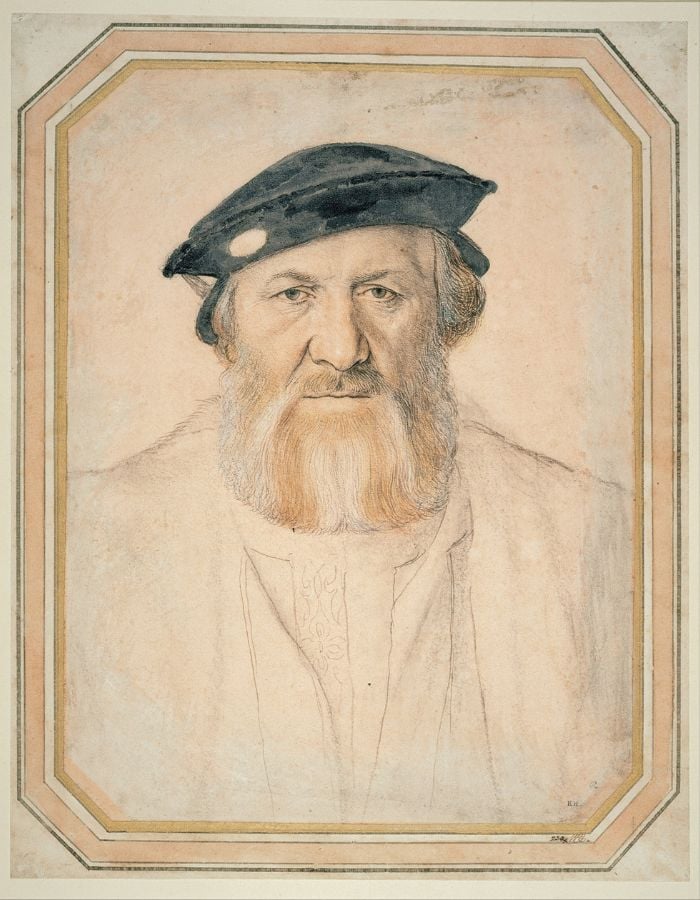
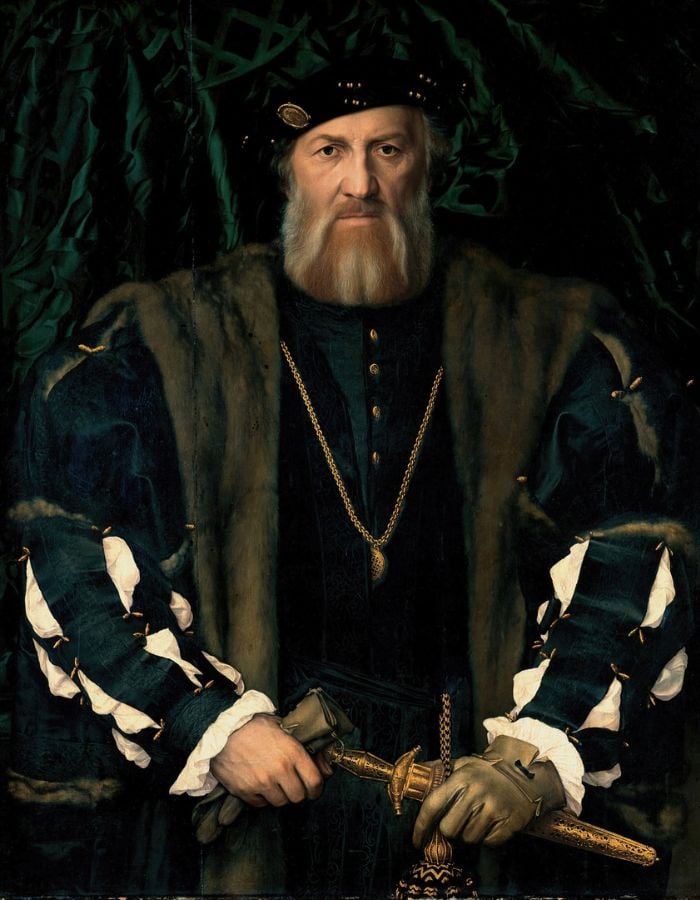
Holbein is well known for his portrait drawings, and these were not casual sketches. They were highly resolved studies in which he worked out the structure, proportion, and likeness of the sitter with extraordinary precision. These drawings were not merely preparatory—they were foundational. Above we can see a drawing study of Charles de Solier. Compare the drawing to the finished painting.
There is enough evidence to suggest that Holbein would sometimes paint primarily from these drawings rather than from the sitter directly. In other words, the portrait painting itself may not have been done entirely from life—the drawing was.
Holbein’s Christina of Denmark
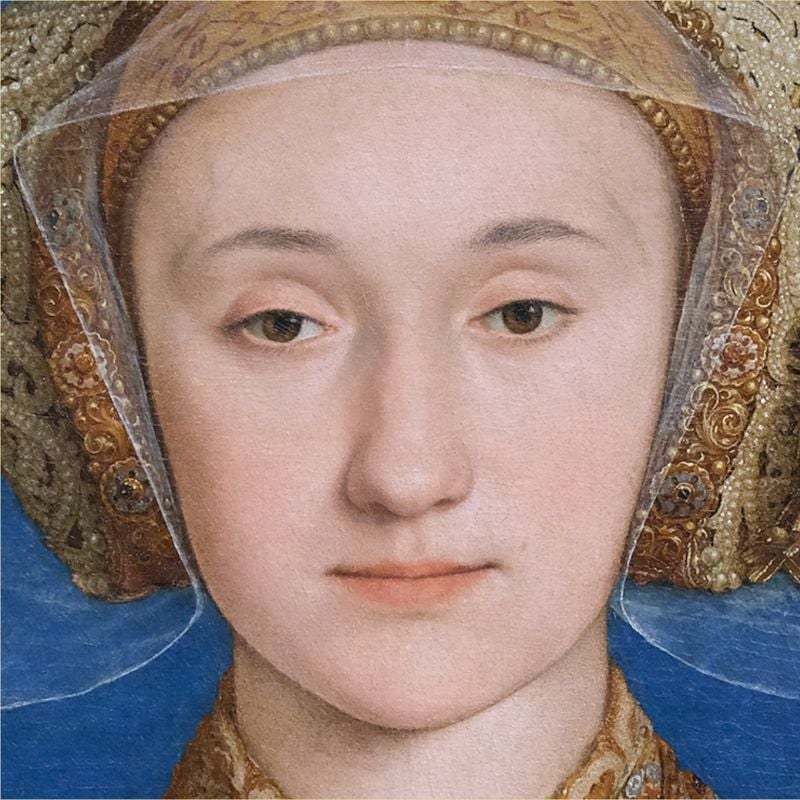
We have especially strong records of this in his portrait of Christina of Denmark. We know that he made drawings of her from life in a single sitting of about three hours. He did not paint her—he only drew her from life. Historical records are very clear on this. He then took the drawings he made back with him and used them as references for the painting.
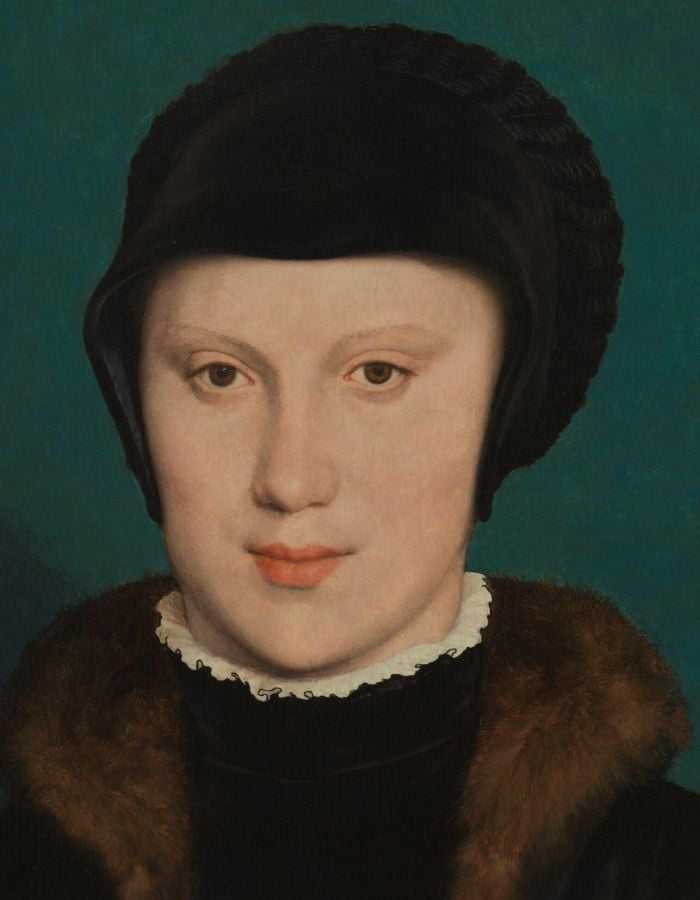
This tells us something extremely important: the painting was not the primary place where likeness was discovered—it was the place where likeness was carried through.
And that reminds us of a fundamental truth: likeness does not begin with detail. It begins with structure.
It begins with the placement of the features, the architecture of the head, the relationship of one shape to another, and the overall organization of the face. When those are working together, the painting already has a strong foundation beneath it. When they are not, no amount of detail can truly save it.
He Had a System, Not a Formula
If Holbein was often not painting directly from life, then how was he able to make the final portrait feel so alive? In color no less?!
The fact that he could work from drawings and still create portraits of such life and beauty tells us something very important: he had a deep understanding of how color and value work together.
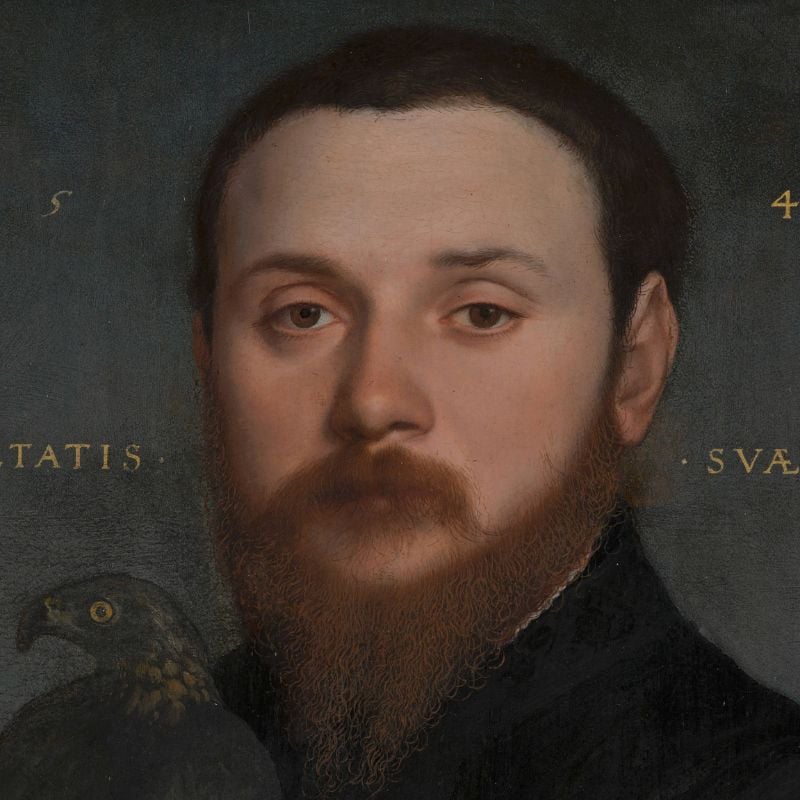
He was not simply copying whatever he saw in front of him in the moment. He understood enough about how light behaves across form that he could reconstruct what was needed in paint.
This is one of the most fascinating things about Holbein’s work. His paintings do not feel formulaic or repetitive. They feel incredibly alive and specific. And yet, there is every reason to believe that he had a system—a visual understanding of recurring relationships that allowed him to work with confidence.
That is very different from painting by formula.
A formula is rigid and mechanical. A true system is flexible because it is built on understanding.
How Color Temperature Creates Form
Holbein seems to have understood how light organizes the planes of the face, how values must relate to one another, and how color temperature shifts across form. He was able to determine what a passage needed to be—not by guessing, but by understanding the visual logic of what he was painting.
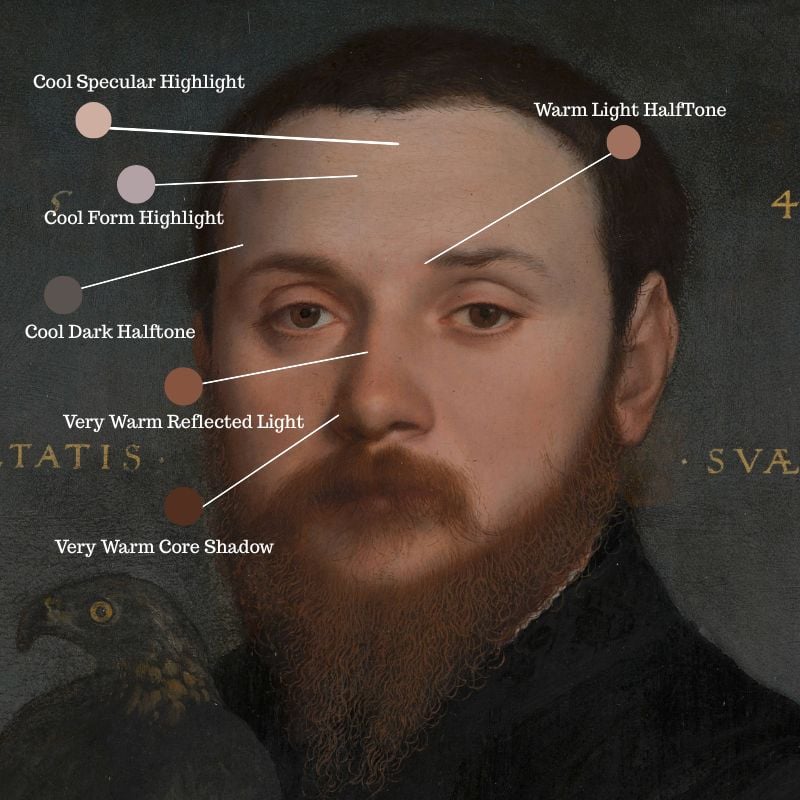
This is something we can learn from directly.
The goal is not to memorize formulas or fixed color recipes. It is to build a deeper understanding of how color and value actually behave, and to develop a logic behind what you are seeing.
When you begin to understand these relationships, you are no longer as dependent on constant reference. You are able to think your way through a painting.
He Knew How to Simplify Without Losing Life
Another profound lesson Holbein offers painters is that simplification does not mean sacrificing life, specificity, or beauty.
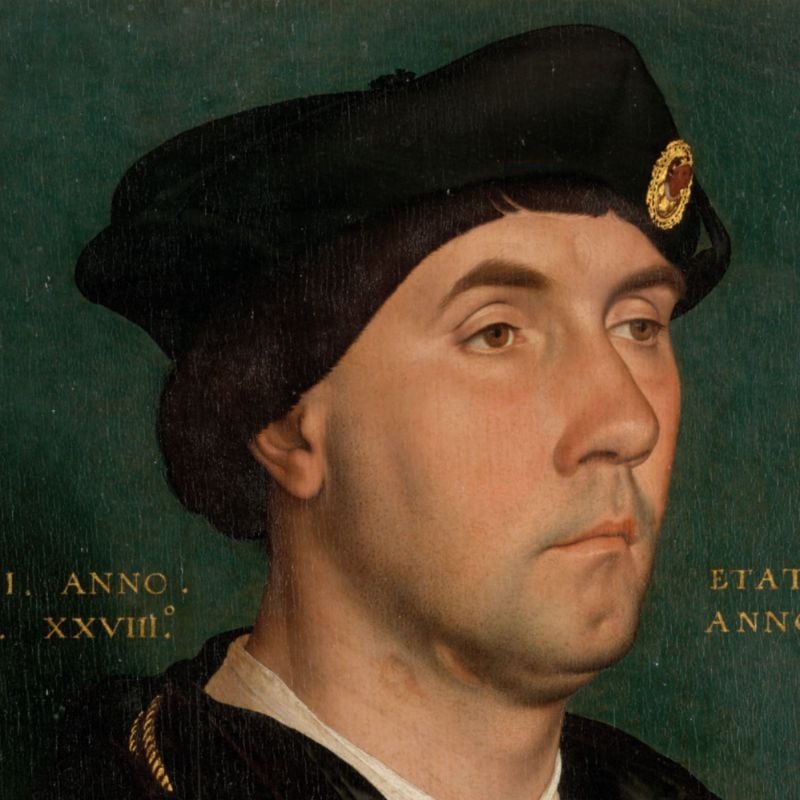
Many painters are afraid to simplify because they assume it will make their work feel generic or less realistic. They think that if they do not include enough variation, enough detail, or enough “information,” the painting will lose its realism.
But Holbein’s work shows the opposite.
He is a powerful example of the fact that simplifying does not mean you cannot have great specificity and detail in a painting. In fact, it is often simplification that makes that specificity possible.
The Power of Simplifying
His portraits are not overloaded with unnecessary visual noise. They are highly organized (he was German after all). His values are controlled, color relationships are disciplined, and his forms are stated with clarity rather than fussiness.
And because of that, he is able to push certain areas with tremendous precision and beauty without the painting becoming overworked or dead.
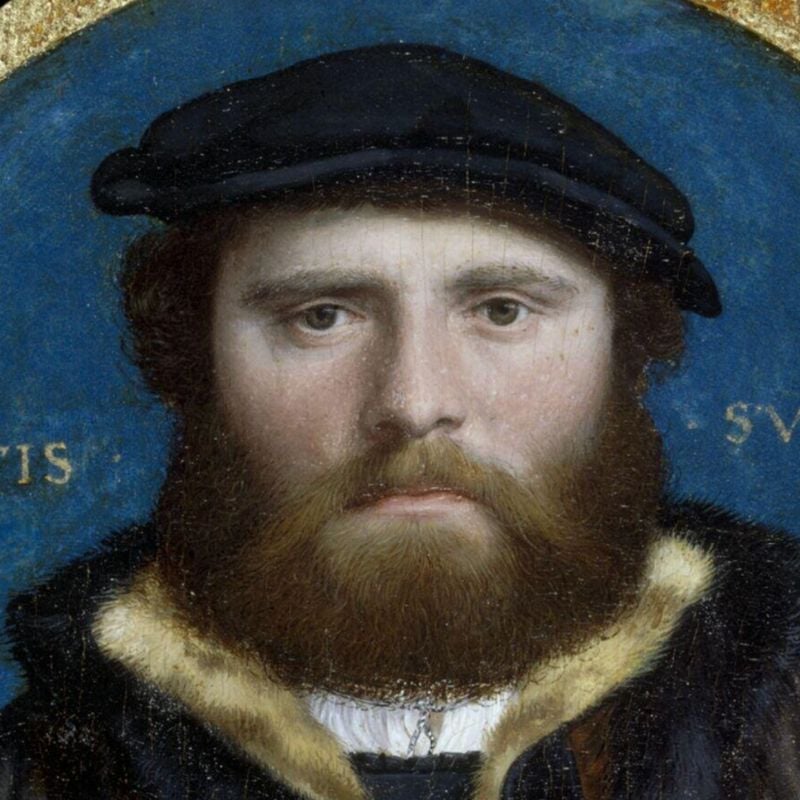
This is one of the great paradoxes of painting: the more clearly you can organize what you see, the more alive the painting can become.
Holbein’s paintings do not feel alive because he copied every fluctuation equally. They feel alive because he knew what to simplify, what to preserve, and where to place emphasis.
What Makes Hans Holbein the Younger so Important
What makes Hans Holbein the Younger such an important painter to study is not simply that he was skilled, historically significant, or capable of making beautiful portraits.
It is that his work reveals what deep understanding in painting actually looks like.
His portraits feel alive because they are built on more than surface appearance. They are grounded in structure, preparation, visual logic, and restraint.
And that is perhaps one of the greatest lessons painters can take from Holbein today:
A convincing painting does not come from copying more.
It comes from understanding more.
Want to remember this? Save What Painters Can Learn from Holbein to your favorite Pinterest board.

11 thoughts on “What Painters Can Learn From Hans Holbein the Younger”
Wow! Wow! What an amazing in depth study you have done Elizabeth. Congratulations. So much interesting and important information you have brought to light; all of which is so helpful to us artiste. Thank you.
So glad this is helpful and interesting! Thank you so much for sharing that! I do hope to share more in the future as I study and learn more about Holbein.
When I look at the works of these great artists I always think they are beyond analysis. They seem to have a supernatural, miraculous quality – there is an element of magic in them. I wonder how they were regarded in their time. I wonder if they were sometimes regarded with fear and suspicion. Possibly that they captured the soul of their sitters. Sometimes their paintings seem to be more than real. One example of this is Rembrandt’s portrayal of Anna in the Rijksmuseum. How on earth did Rembrandt make her elderly hand resting on the page of the book, look so uncannily real ?
Love your articles and instructions, Elisabeth.
Thanks and Best Wishes,
Tom Walters
It is a very interesting way to understand a the quality of an artwork, a detailed explanation. Thank you!
Thank you for your wonderful insights into this great painter.
I will endeavor to understand more and try to get a better grasp of value – beyond just 3 values.
Thank you again for all your hard work.
I enjoyed this feature very much. Thanks, Elizabeth.
-Pam
Very glad to hear that Pam!
Lovely article. Fascinating thought.. structure in pencil, execute in paint. I wonder how much time was spent painting compared to drawing?
Yes, I also wonder that as well. I imagine that a significant more amount of time was spent painting compared to drawing. But he was able to work faster in paint than he would have had he not done so much preparation before hand. We do have record that he apparently made “drawings” so at least more than one in a 3 hour span of time when drawing from Christina of Denmark. Unfortunately none of the drawings exist anymore. But this gives us an idea that he had quick fingers…
Very interesting article. I love to detailed colours of the face.
Glad you enjoyed this one Sandra – I agree, I do as well!