
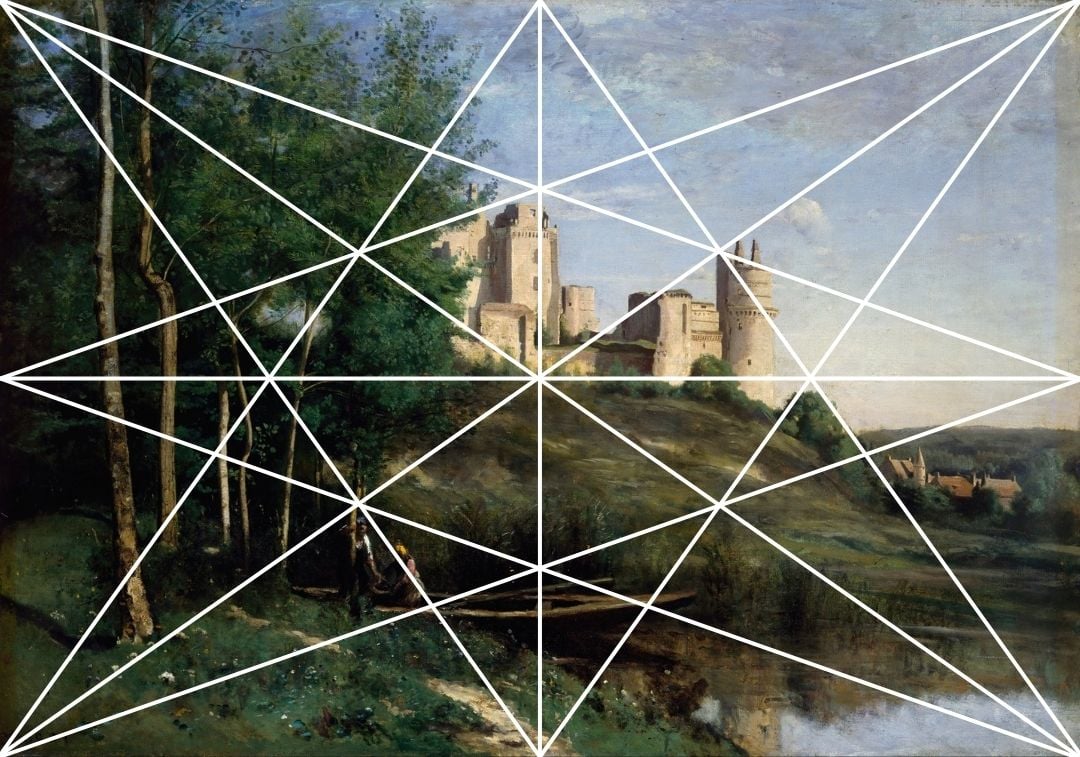

When you look at a great painting, you might first notice the subject, the brushwork, or the colors. But the reason why the painting stands out to you at all is really because it has a strong composition. It is the underlying structure that holds everything together. One of the most powerful — yet often overlooked — tools painters can use to create this structure is the harmonic armature.
Think of it as a hidden grid that helps organize your painting. Once you understand it, you’ll start to see it everywhere: in Renaissance masterpieces, in landscapes, even in modern works. And when you begin to use it in your own painting, you’ll notice your compositions start to feel more balanced, intentional, and alive.
What Is the Harmonic Armature?
At its core, the harmonic armature is a geometric framework based on diagonal divisions of a rectangle. It’s sometimes called the “armature of the rectangle” or dynamic symmetry grid.
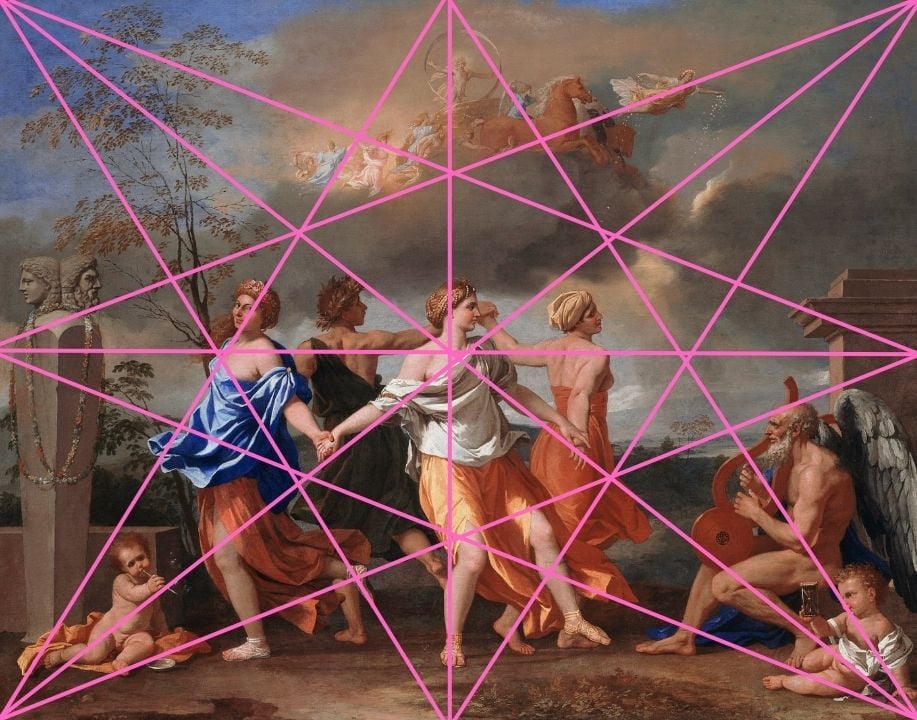
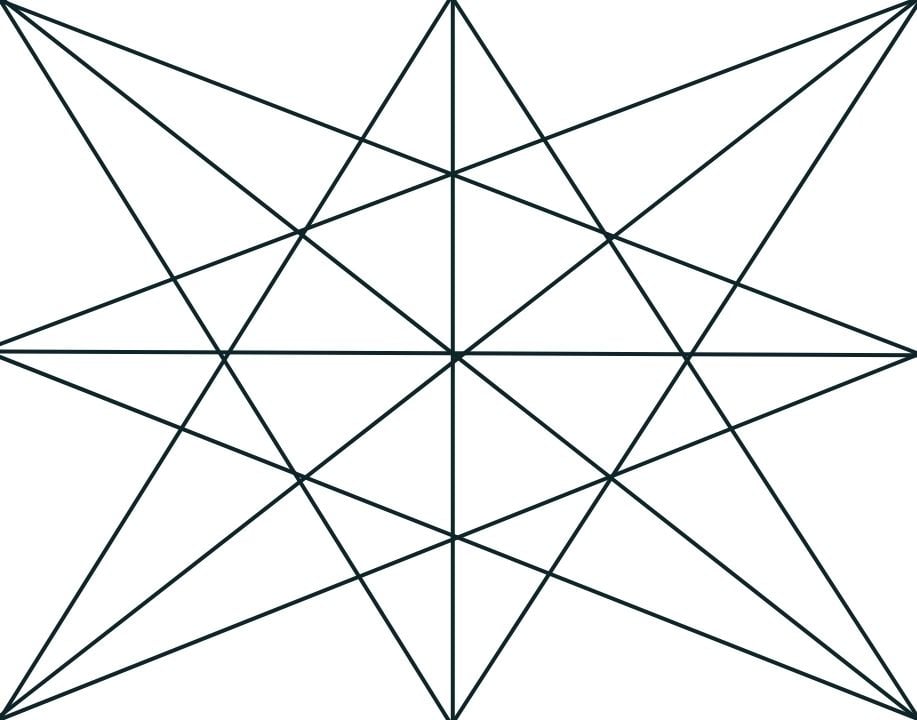
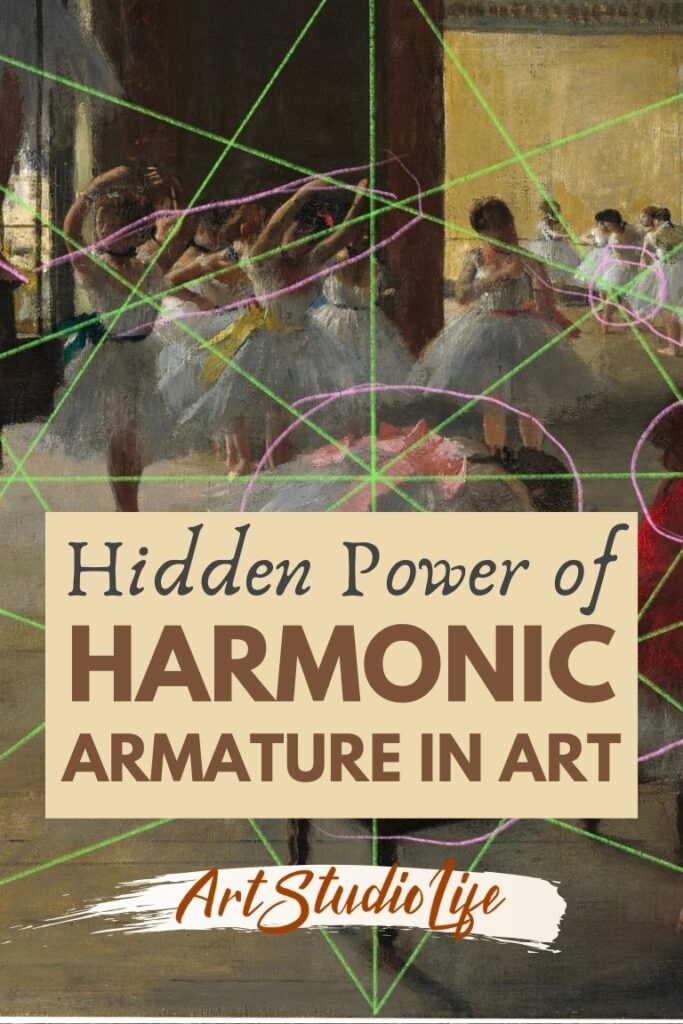
You can create it on your canvas by drawing out a middle line both horizontally and vertically. You then add diagnonal lines for every direction. Though it is best to just see what the harmonic armature looks like visually – as in the image above.
You end up with an elegant web of intersecting diagonals. These lines and their intersections show areas of interest. When you align the main elements of your composition with them, the painting will feel harmonized and strong.
Why Painters Use It
The harmonic armature isn’t just geometry for geometry’s sake. It solves some of the biggest compositional struggles painters face:
- Balance without symmetry – It creates a natural sense of order without forcing everything to be centered.
- Energy and movement – Diagonals generate dynamism; the eye travels along them.
- Unity – When multiple forms line up with the armature, the whole painting feels cohesive.
- Flexibility – You don’t need to use every line, just enough to strengthen your design.
It also gives you a structure for when you are mystified about how to proceed with a composition. Composition can be really tricky and this tool gives you help in figuring out the best most compelling composition for yourself.
How to Apply It in Your Own Paintings
Step 1: Start with your canvas shape

Every rectangle (or square), no matter the size, can have an armature. The beauty is that it scales up or down perfectly because it is simply made up of lines. You also never need to measure anything because you simply align the lines against each other. So you can easily use it with nearly any project you make.
Step 2: Draw the grid lightly
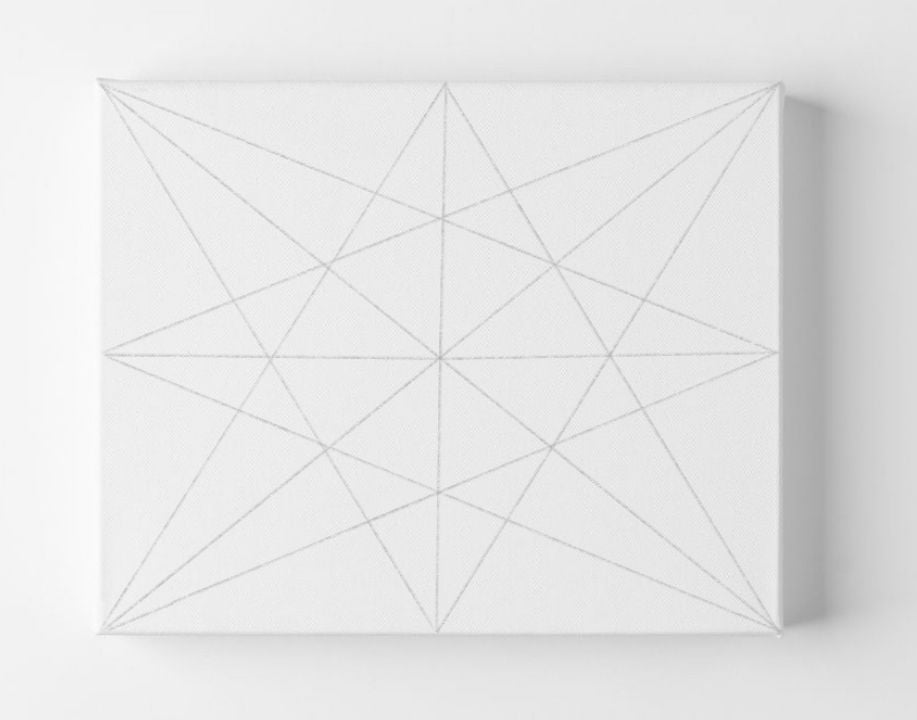
When planning a painting, sketch out the harmonic armature in your thumbnail or underdrawing. I do recommend to make a sketch before you start painting – so this is a perfect way to work out your composition before getting started on your canvas. Though I strongly recommend working from life, if you are working from a photo reference you can also easily draw the harmonic armature on top of it.
Step 3: Place your focal point
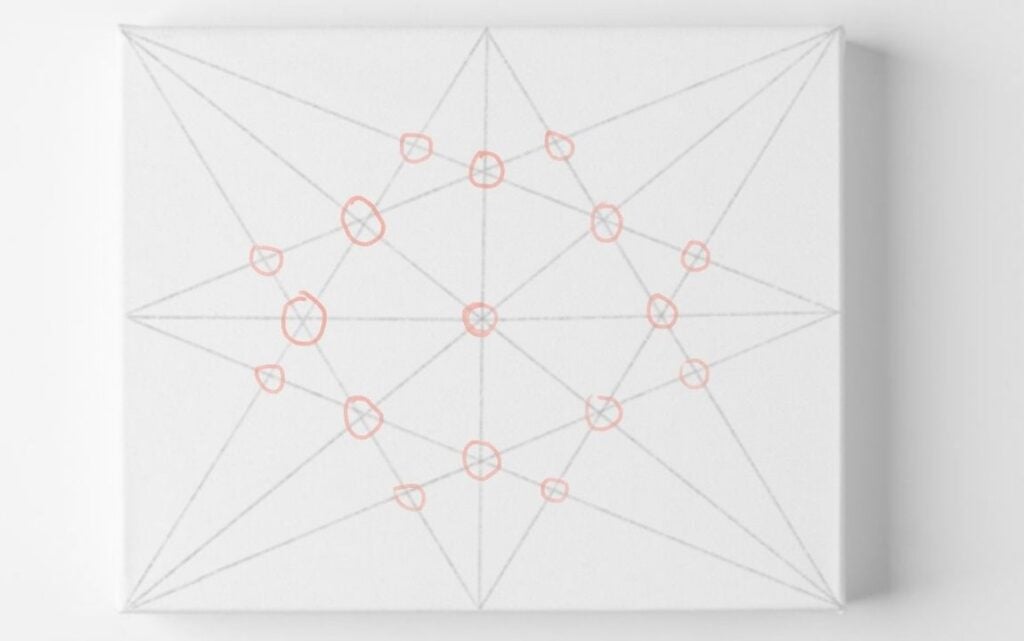
The intersections of diagonals often make excellent focal points — they feel powerful without being “dead center.”
Step 4: Align major elements
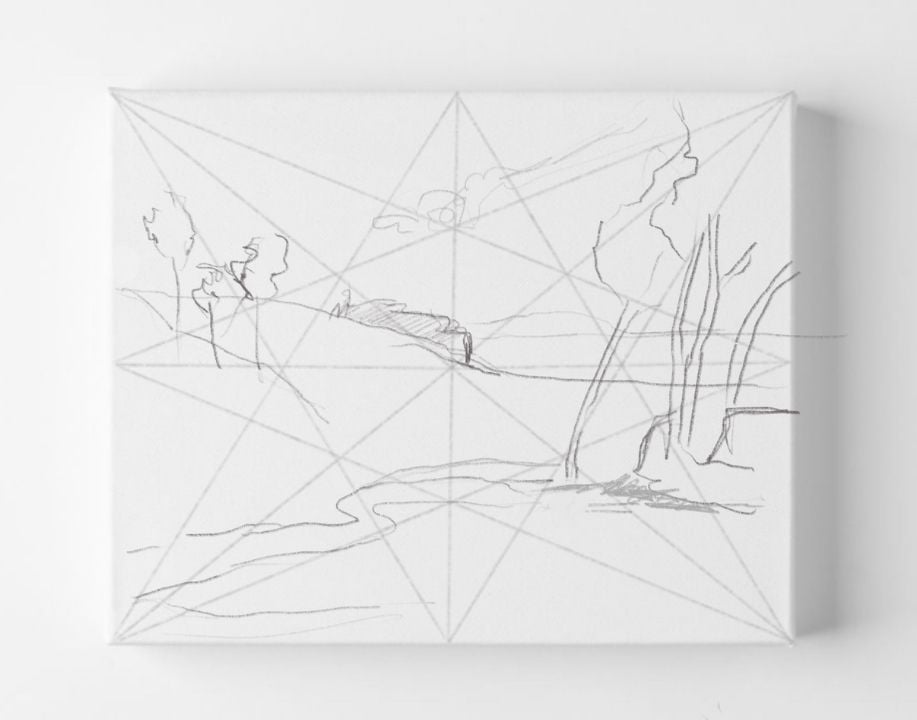
Try lining up the edge of a mountain, the arm of a figure, or the horizon with one of the diagonals. Suddenly, the whole scene feels tied together.
Historical Examples
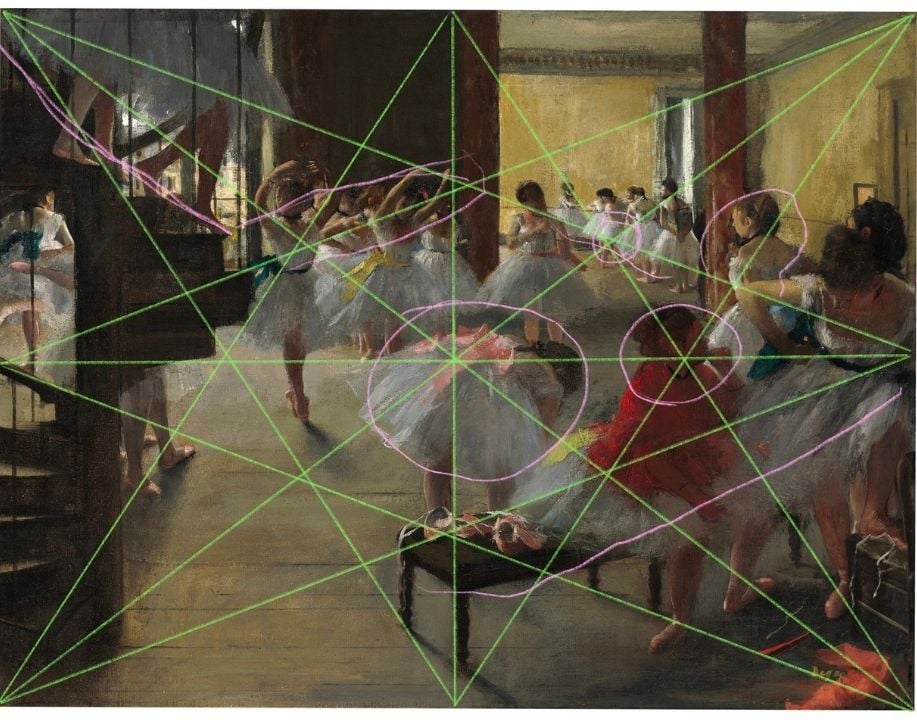
- Renaissance painters used harmonic armatures to structure altarpieces and portraits, ensuring balance and rhythm.
- 19th-century landscape painters often aligned trees, rivers, and horizons with these diagonals.
- Even contemporary realists rely on them, often unconsciously, because these relationships simply work.
Why This Matters for You
So often, painters struggle with compositions that feel “off” but can’t quite explain why. The harmonic armature gives you a concrete tool to diagnose and fix those issues. It helps you place things with purpose — not guesswork.
However, at the same time don’t make it obvious that you are using the harmonic armature to construct your composition. When using it, your composition should look natural and not forced. The worst thing is to treat it like a formula. So, don’t try to align something along every single diagonal. But create something that is well balanced, interesting, and engaging.
Final Thoughts
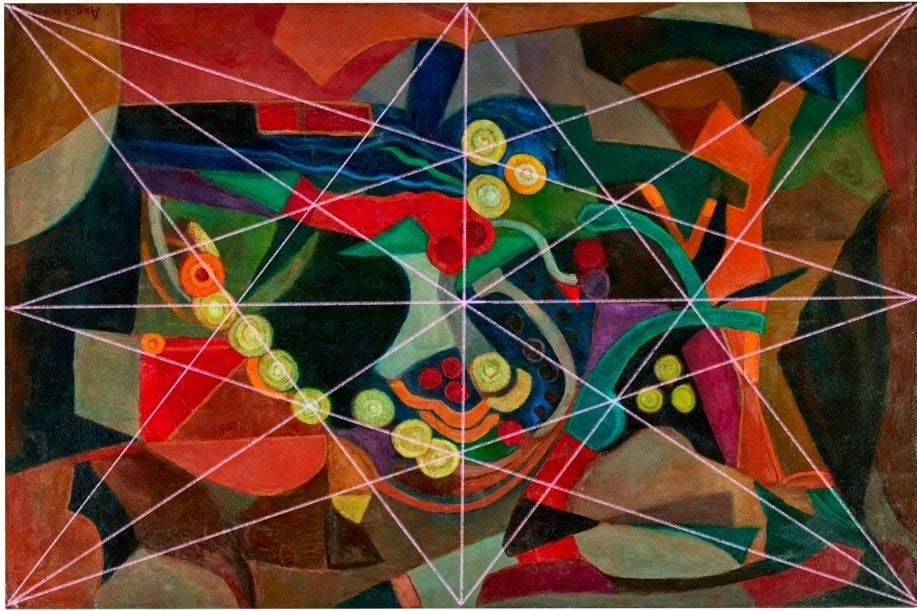
The harmonic armature is like the skeleton of a painting — invisible, but essential. Once you begin to see it, it is hard to unsee it. And the best part is that you don’t need to follow it rigidly (and it is best not to!). It should be treated as a guide – a silent tool helping you organize ideas.
The next time you set up your canvas, try sketching the armature and placing your subject along its lines. You may be surprised by how much stronger your painting feels. Over time you will gain an intuitive feel for it and will not need to draw it out for yourself.
Want to remember this? Save this guide about Harmonic Armature to your favorite Pinterest board!

28 thoughts on “The Harmonic Armature: A Hidden Tool for Stronger Compositions”
Missed this completely!
I was preparing for a hip replacement October 1st.
It has been a perfect recovery and I am preparing for a right hip at this point.
Left was more damaged.
I’m in rehab and it is going well.
This past year up to know has been miserably cold & wet & all shades of gray.
Have been sketching in a small book to breakup my recovery schedule.
My family has been so supportive and I deeply appreciate all their efforts and encouragement.
I hope to get back to my oil paints and hopefully watercolor outside once we done have rain & strong North winds all week. Rochester has never had such consistently bad weather conditions.
So very lovely to hear from you Patricia! I remember your hip replacement surgery and was worried when hadn’t heard from you in a while. Am very very glad that you have made such a wonderful recovery. So glad that you have been able to keep up with your sketch amidst the recovery process. What a gift drawing is! As it is something that is so mobile and we take take it with us whether on the road or if we need to rest in bed. So glad to hear that you are blessed with such wonderful and supportive family! It will be wonderful when you can once again enjoy the colors of your paints – hopefully by then you will have beautiful weather in Rochester to provide more inspiration!
Thank you so much for sharing this valuable information, this is the first time I’ve heard about this grid , and when I try to put it to some of my best work I found myself following it naturally , and I felt more confident, thank you so much for helping always I appreciate that
I am so glad to hear that! Thank you for sharing.
Thank you for sharing this Elisabeth. Like many others I had never heard of this grid. And am finding it super helpful to use. I started off drawing the grid in carefully, then placing composition very intentionally. The results were quite pleasing! And helped me make some good decisions. Now I find myself using it more naturally. And also it’s helping me decide where to start and how to proceed in my layouts. I feel more relaxed and confident. Thank you so much!
That makes me very happy to hear! Thank you for sharing that.
I am intrigued by past masters knowledge of composition. I will try this tool in my next painting. Very useful information. Thanks so much.
So glad to hear that! Thank you for sharing 🙂
Thankyou again Elizabeth
Another fascinating and helpful article. You are a mine of information to help less experienced painters along their way.
Thank you so much for your kind words! Really appreciate it! Very happy to hear this is helpful 🙂
Thanks for this info. Never heard of this type of grid. The only one I am familiar with is the rule of the thirds. I use it in my next painting (whenever that is!!)
Joe
God bless
Glad this is new information! It isn’t spoken about much – which is why wanted to shed some light on it.
Arhhh that makes sense 😂 no wonder I’m lost!
Thanks Elizabeth I’m off to practice 🙏🏻😘
Vikki
You are so welcome Vikki! Glad this was helpful.
Very interesting subject and so helpful, especially when I learn that even professional artist use this system. Thanks.
So glad this is new and helpful information! Thank you for sharing 🙂
Loved this. Very helpful. Thank you
You are so welcome Janet!
Another excellent article!!
Thank you so much Dana!
This is really a great explanation. I had seen this tool before, but like many things just got shoved into the back of my brain. I think I will sketch this armature on tracing paper and let it overlay some of my previous and current sketches to see 1) if my past composition intuition has been okay, and 2). To be more proactive in future compositions:-)
Thank you, Elisabeth!
That is such a great idea to draw it on tracing paper and then can overlay that – nice tip!
I find the armature article very fascinating and will have to explore it further in my paintings!!
So glad you enjoyed learning about it!
This has been a very enlightening article. Looking forward to using it to enhance my work. Thank you
Very glad This article has been helpful – thats great that you will apply it in your work!
Thank you. That just fascinates me.
It really is so interesting! Glad you enjoyed this.