
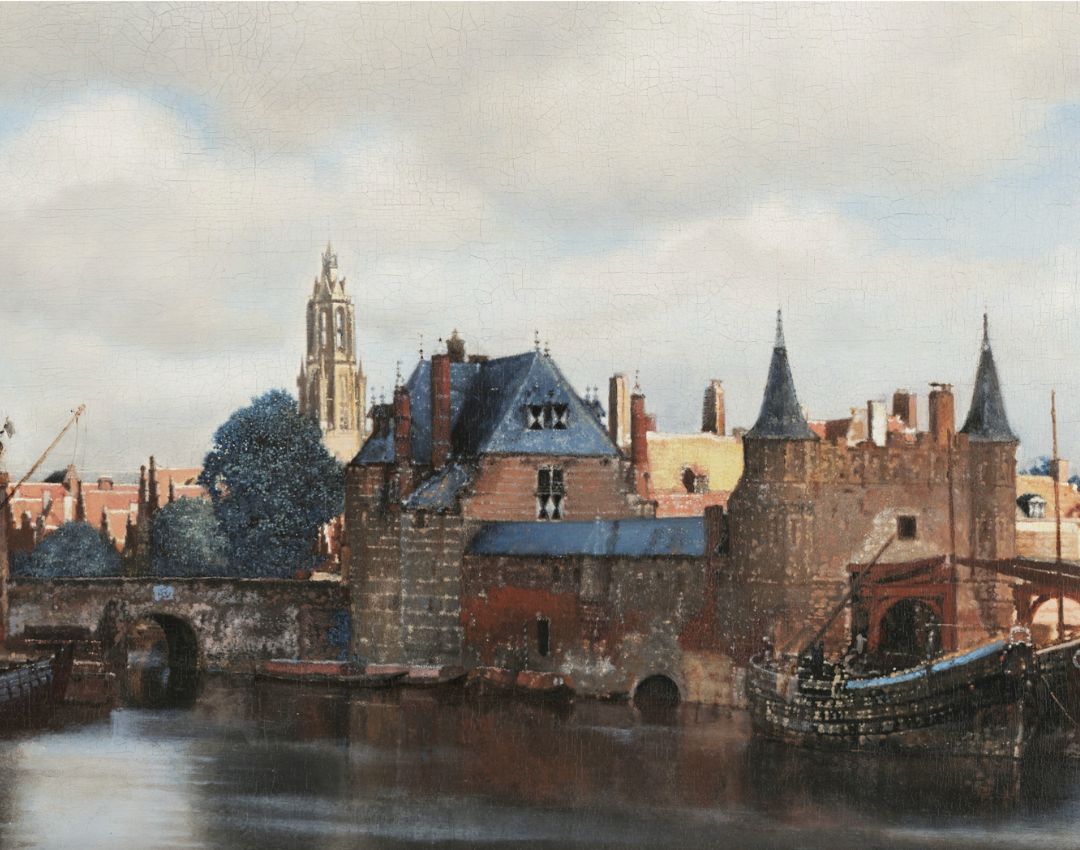

Making the foundation of a painting is not all that different from making the foundation of a house. Everything is built on top of it, and it needs to be simple and strong if the whole structure is going to work and stand the test of time.
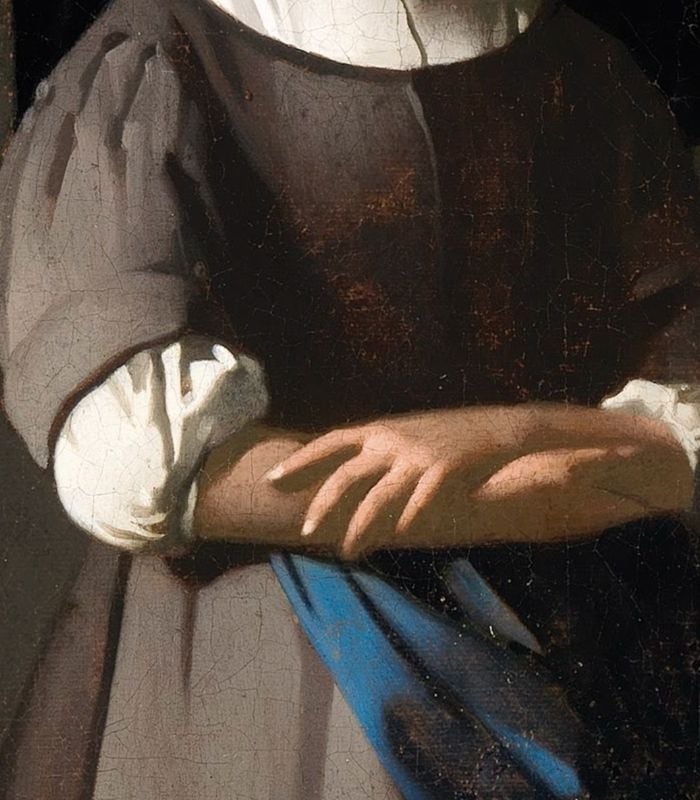
A house built on shaky loose ground, for example, won’t survive very long—sometimes not even beyond the initial building phase. A solid foundation isn’t created by adding trim, baseboards, or paint. Those elements come much later. The first step is far more basic: pouring a firm cement base that can support everything that follows.
Painting Is Built the Same Way
Painting works in much the same way.
You don’t begin a strong painting by carefully rendering small details. Before any of that can matter, you need a solid underlying structure to work from. This is truly essential and can’t be emphasized enough. It’s often more fun to chase after the eye-catching details right away, but without a strong base, those details won’t have much impact.
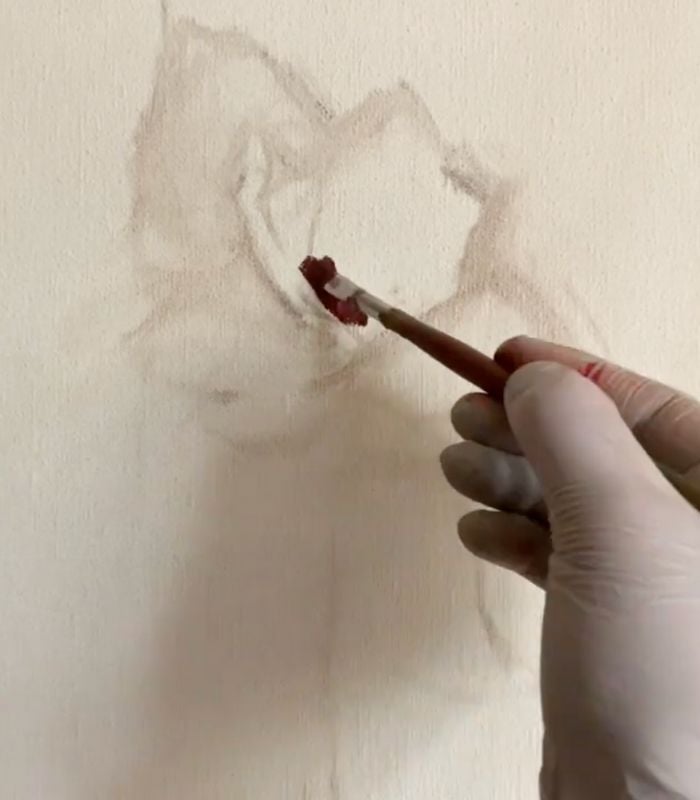
Establishing the Big Light and Dark Relationships
To build that foundation, you must first establish the large light and dark areas. These big value relationships do the heavy lifting in a painting. They create clarity, structure, and a convincing sense of light.
If you’re learning how to think and work this way, it can help to approach the early stages of a painting as working in statements. Instead of describing everything, you’re making clear, simple declarations of color and value.
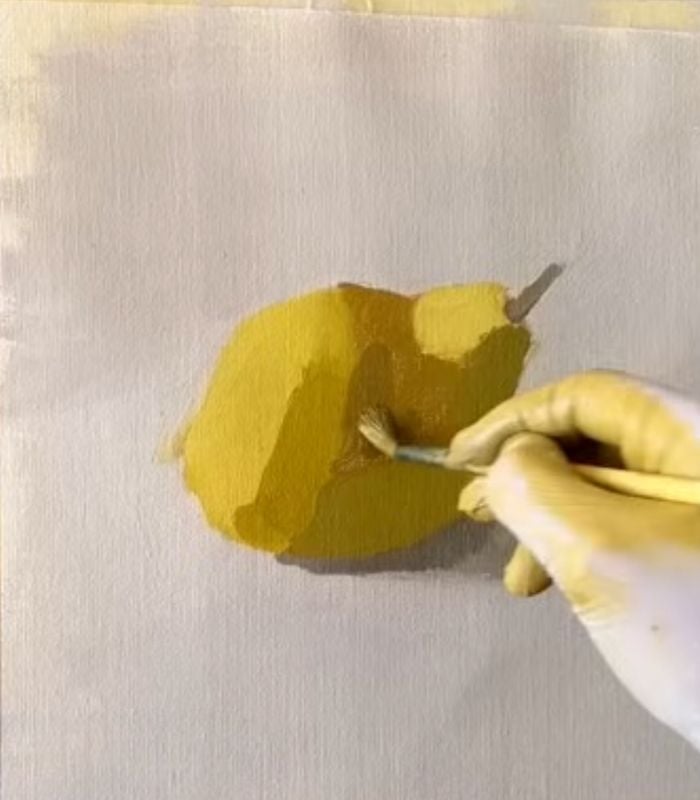
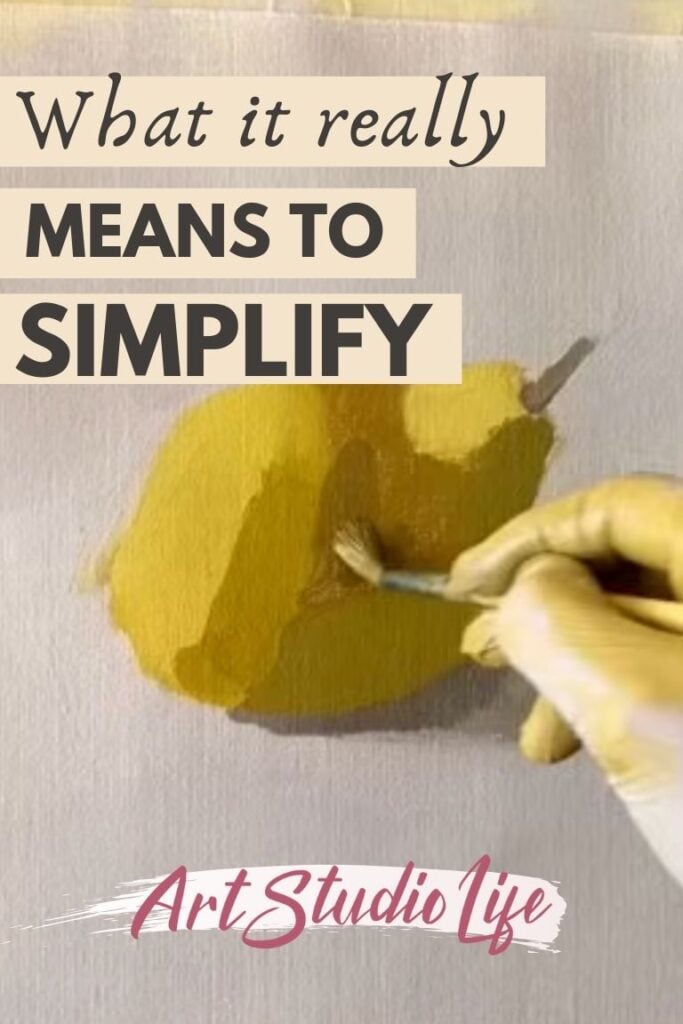
In this YouTube tutorial you can see how I develop this painting of a pear by breaking down color and values into simplified areas. This kind of simplification creates an exceptionally strong base and trains you to see the painting as a collection of clear, organized shapes rather than scattered details.
This isn’t a way of painting that you would use continuously. Instead, it’s a way of training your eye to see the world as simplified, broken-down areas of color. Once you begin to understand and internalize this way of seeing, you can return to painting in a more natural, intuitive manner—only now with much greater clarity and control.
Why Simplification Creates Stronger Paintings
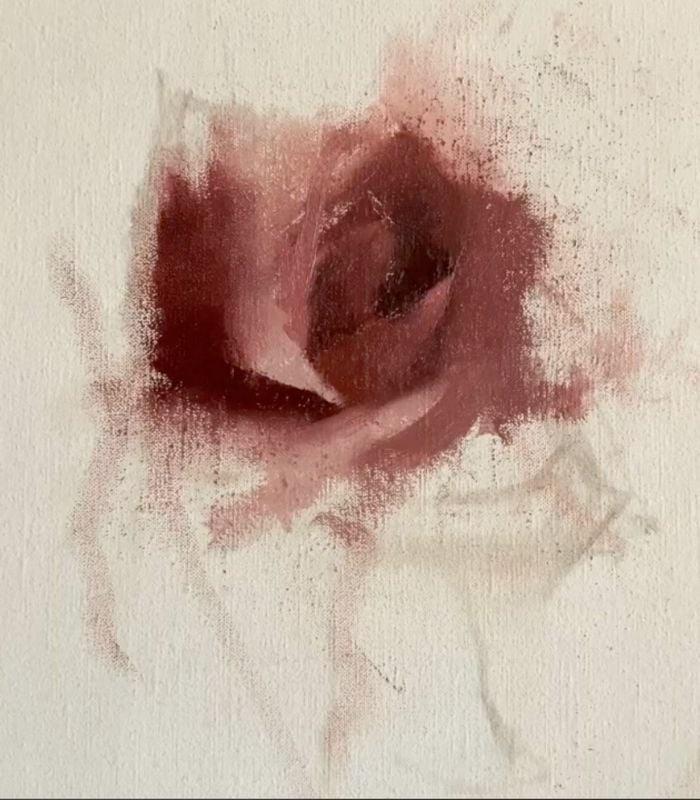
When you work this way, something important happens: your painting gains clarity. The light becomes more readable, the forms feel more unified, and you give yourself room to take the painting much further.
Sometimes painters worry that working in such a simplified way at the beginning is “too simple” for their level.
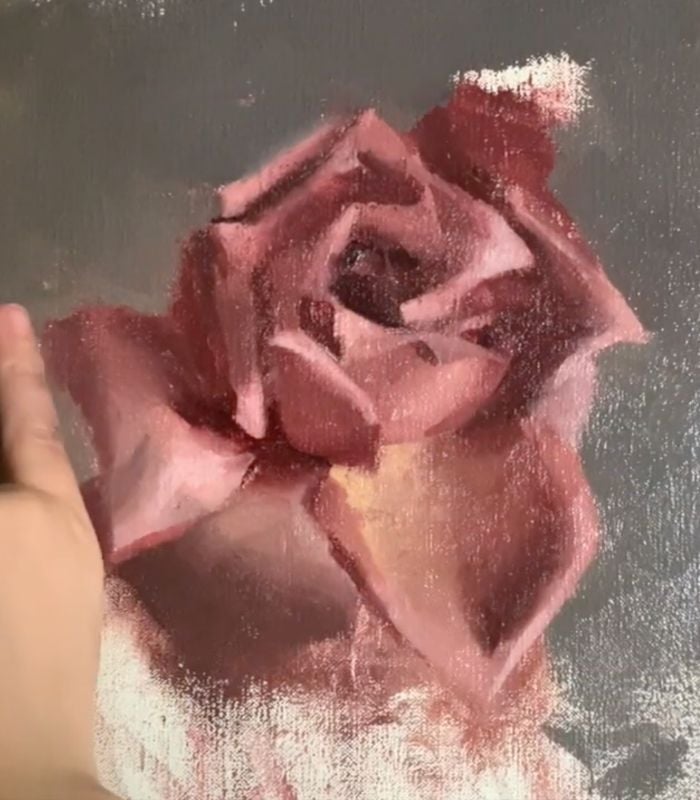
Let me be very clear about this: it is never too simple—no matter how advanced you are.
The greatest painters throughout history were great precisely because they could simplify. Simplification is not a beginner skill; it’s a lifelong one. It’s a cornerstone of creating work that is both complex and compelling. Without it, progress slows dramatically, and paintings tend to become overworked and unclear.
Build the Structure First
If you want your paintings to feel strong, coherent, and enduring, focus first on the foundation. Make it simple. Make it clear.
Everything else depends on it.


14 thoughts on “Why Strong Paintings Often Have Simple Underlying Structures”
Thank you, Elisabeth, for this educational and interesting excursion into seeing colours, values and their application to the canvas. I always enjoy your videos and your pedagogic approach.
Thank you so much for your kind words, I really appreciate it!
Hello (or shalom) do you speak Hebrew? I paint many years. I learnd. somtims i paint to much… to many details, wich i realy don’t like, and the subject is too important to me… i think too much. trupped. thank’s for any answers!
Yes I do speak Hebrew! Though unfortunately am a little rusty now. So glad this was helpful! thank you for sharing that. It takes time to get past the details – but with time and practice it gets easier.
A fantastic reminder once again… So easy for me to get overwhelmed with detail and fussiness – usually making far too many shades in between light and dark. Thank you.
It is so easy to get too fussy with things in your painting… I’m well acquainted with that! Glad this was a good reminder – thank you for sharing.
Thank you! Some of my paintings look overworked and this should help prevent that!
Yes! It definitely will.
Your succinct explanation demonstrates with words what I now know to aspire to when painting-impart a clear message. Well done and very helpful. Thank you for all of your tutorials.
So glad this is helpful Lauré – thank you for sharing.
Thank you for this information and the chart.
You are so welcome Naomi!
THANK YOU … for another informative and meaningful way of “seeing “
You are so welcome!