


When many people think about painting, they imagine something spontaneous—an emotional release where color is splashed freely across a canvas. And to be fair, there is a place for that. That kind of uninhibited expression can be incredibly useful, much like writing a rough first draft where you simply pour everything out.
But if you stop there, your painting often stops progressing too.
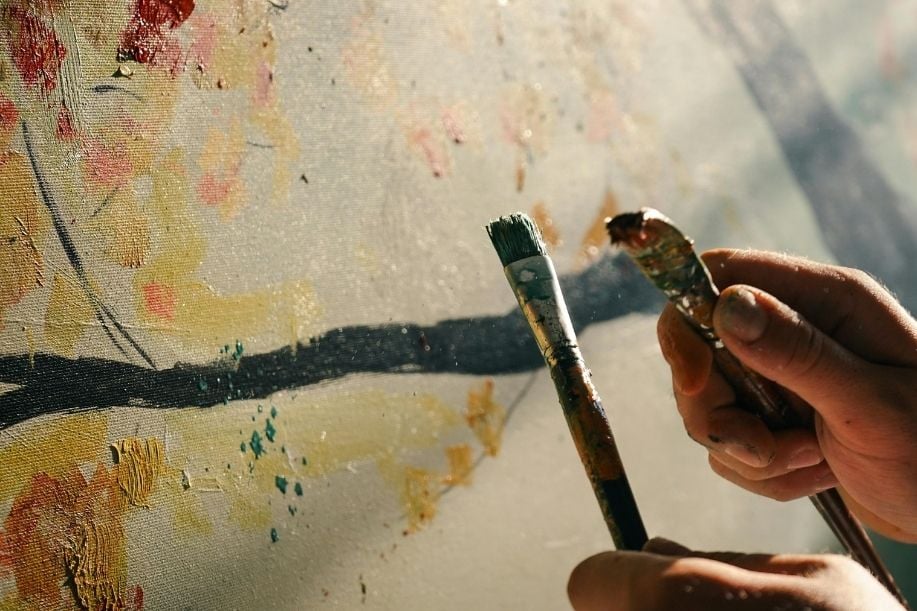
Without structure, that freedom quickly turns into chaos.
To create something truly meaningful—not just for yourself, but for others—painting requires a certain level of restraint. Not rigid control or stiffness, but a thoughtful way of channeling your ideas so they can be clearly expressed. In fact, it’s through this process of restraint that you begin to understand both your subject and yourself more deeply.
Why Restraint Matters
Restraint in painting is less about holding back and more about timing.
One of the most common mistakes painters make is getting too detailed too early. It feels productive in the moment—but it actually limits how far the painting can develop. Without a strong foundation, those early details lock you in too soon, making it harder to adjust, simplify, or strengthen your composition later.
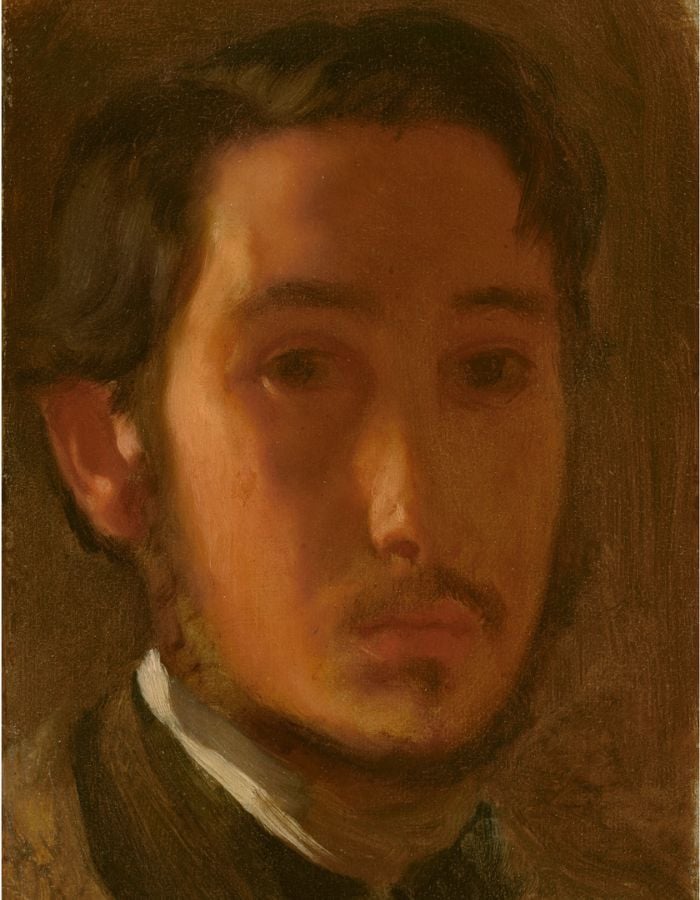
Think of it like building a house.
You wouldn’t install electrical wiring before laying the foundation. If you did, everything would fall apart. Painting works the same way—you have to build it in the order it needs to develop.
When you practice restraint, you give your painting room to grow.
What Restraint Looks Like in Practice
So how do you actually apply this idea while painting?
It starts with simplification.
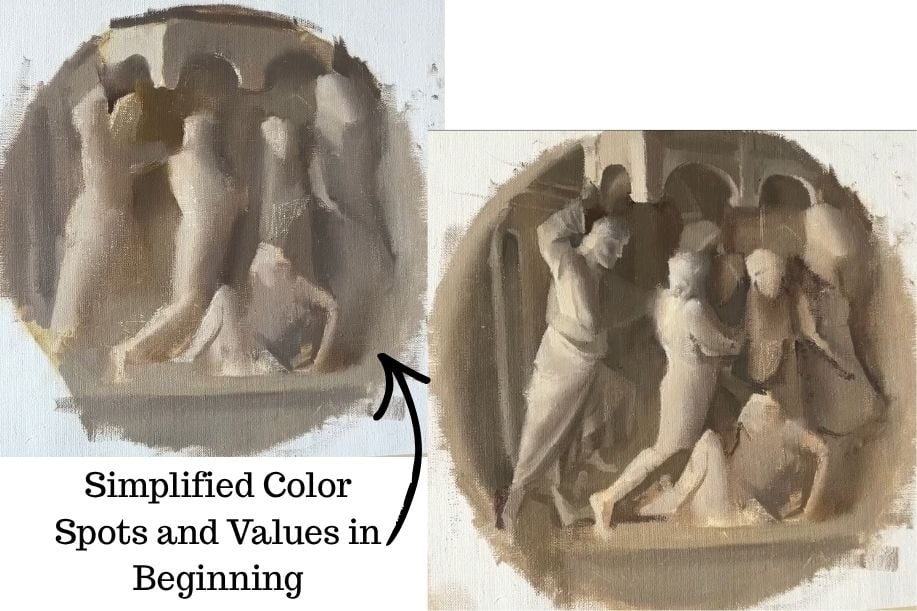
Begin by identifying and organizing your values into three main groups: light, medium, and dark. Look for an area in your subject where all three intersect—this will help anchor your understanding of the overall value structure.
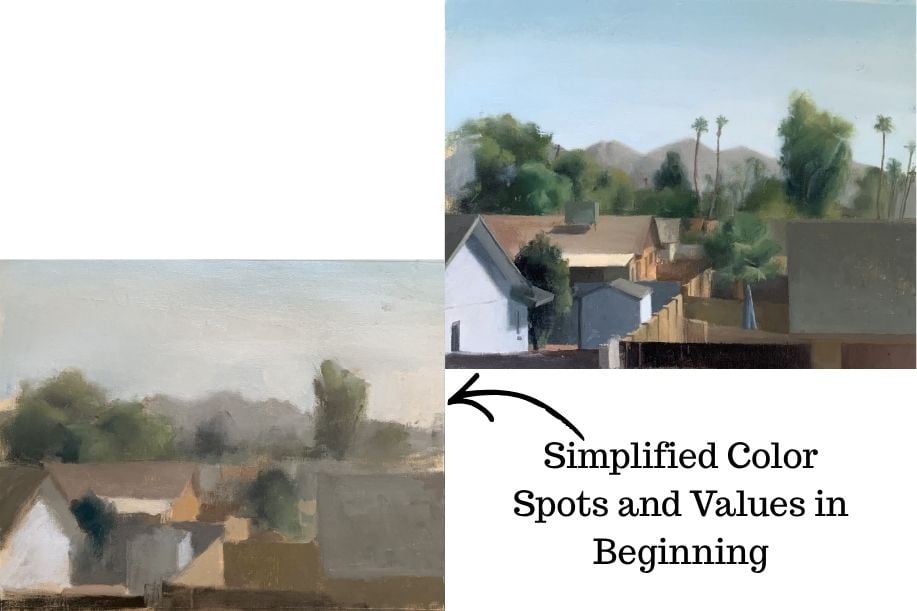
From there, block in the major value and color shapes across the canvas.
At this stage, nothing needs to “look like” anything. Your goal is not detail—it’s accuracy in value and a clear sense of light. You’re capturing the big picture.
And interestingly, this stage can feel incredibly freeing. You’re not worried about perfection or precision—just clarity and structure.
Building Complexity (without losing control)
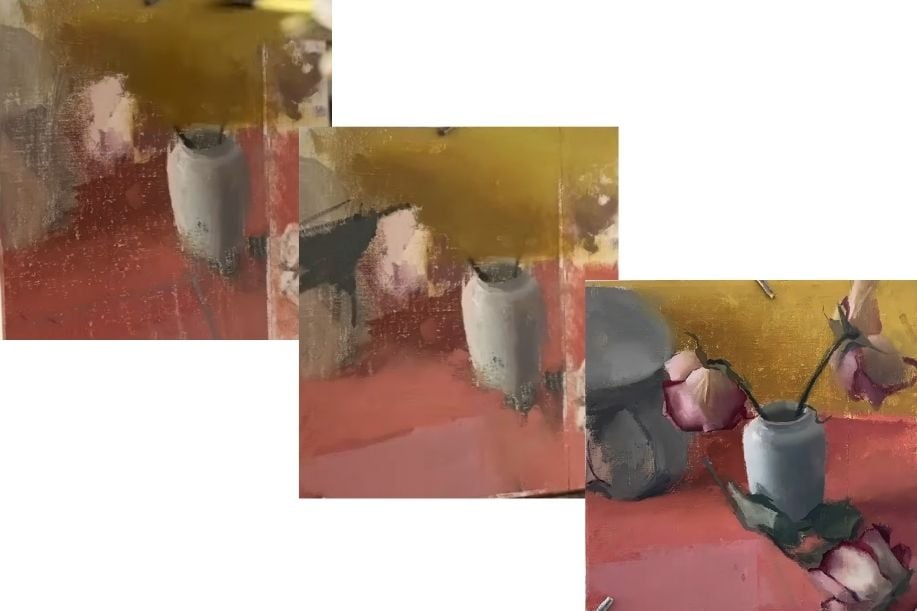
Once your large value and color shapes are established, you can begin refining them.
What was once a single area of color might now become two or three. You start introducing subtle shifts and variations—but your focus remains the same: value and color relationships, not objects or details.
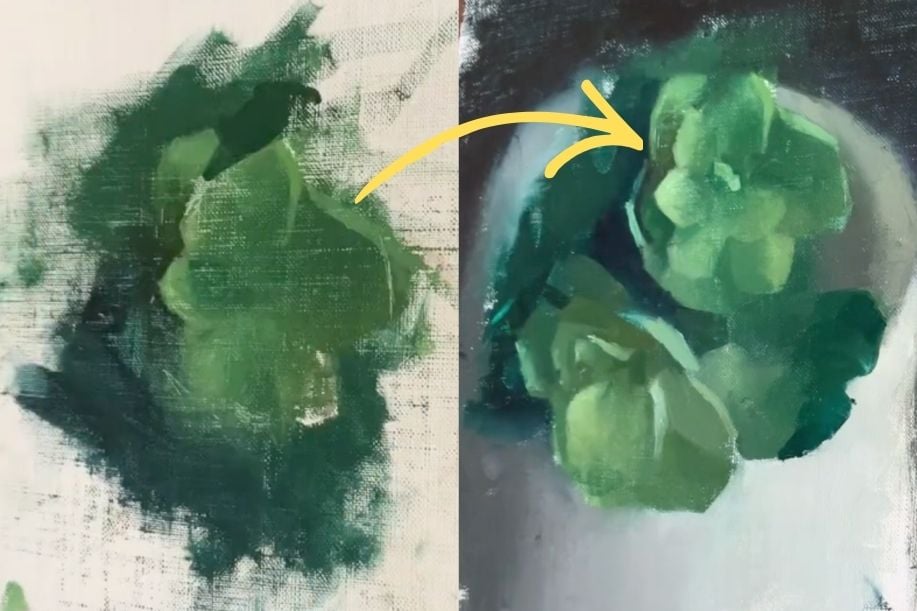
This mindset is key.
When painters lose restraint, it’s often because they rush to make things look like something as quickly as possible. They skip the foundational steps in favor of recognizable forms.
But painting isn’t about rendering objects—it’s about organizing visual relationships.
Staying focused on this helps you maintain control and direction.
Edges, Highlights, and Holding Back
As you refine your painting, you’ll also begin working with edges.
Pay close attention to where edges should be soft and where they should be more defined—usually sharper where there’s stronger value contrast. But even here, restraint plays an important role.
Avoid making your sharpest edges too early.
The same goes for highlights.
Saving your brightest lights and crispest edges until the end gives you far more flexibility. It allows you to build toward a strong finish rather than peaking too soon and struggling to recover.
The Freedom Inside Restraint
At first glance, restraint might seem limiting.
But in reality, it does the opposite.
Restraint gives you control. It allows you to develop your painting step by step, to make better decisions, and to push your work further than you could otherwise.
Of course, this doesn’t mean becoming overly cautious or rigid. Too much restraint can lead to hesitation and stiffness—and that’s not the goal either.
The goal is balance.
When you understand how painting works—its “language” of value, color, edges, and structure—you gain the ability to take something chaotic and turn it into something intentional and powerful.
And that’s where true freedom lies.
Because in the end, restraint isn’t about holding yourself back—
It’s about giving your painting the space it needs to become something great.
Want to remember this? Save the Art of Restraint to your favorite Pinterest board.

10 thoughts on “The Art of Restraint and Avoiding Oil Painting Mistakes”
What a great article. I really needed this advice and think it will be very helpful in my efforts in learning to paint. I have seen artist do this but it did not click in my head.
You explain things so well.
Thank you so much for your kind words – I really appreciate it!
Wonderfully clear and pertinent to my current process
Thats great, so glad to hear that!
Thank you. I found this Very helpful — you explained it well.
Thank you for the Mixing colors – I did receive & will look it over.
Thanks.
Sharyn
Very glad to hear that you received it!
Thank you for the free color guide and advise about restraint.
You are so welcome!
Thank you for this explanation. I have heard many times about the steps you speak of but the way you explain it makes so much more sense!
Very happy to hear that it is clear here – thank you so much for sharing that!