
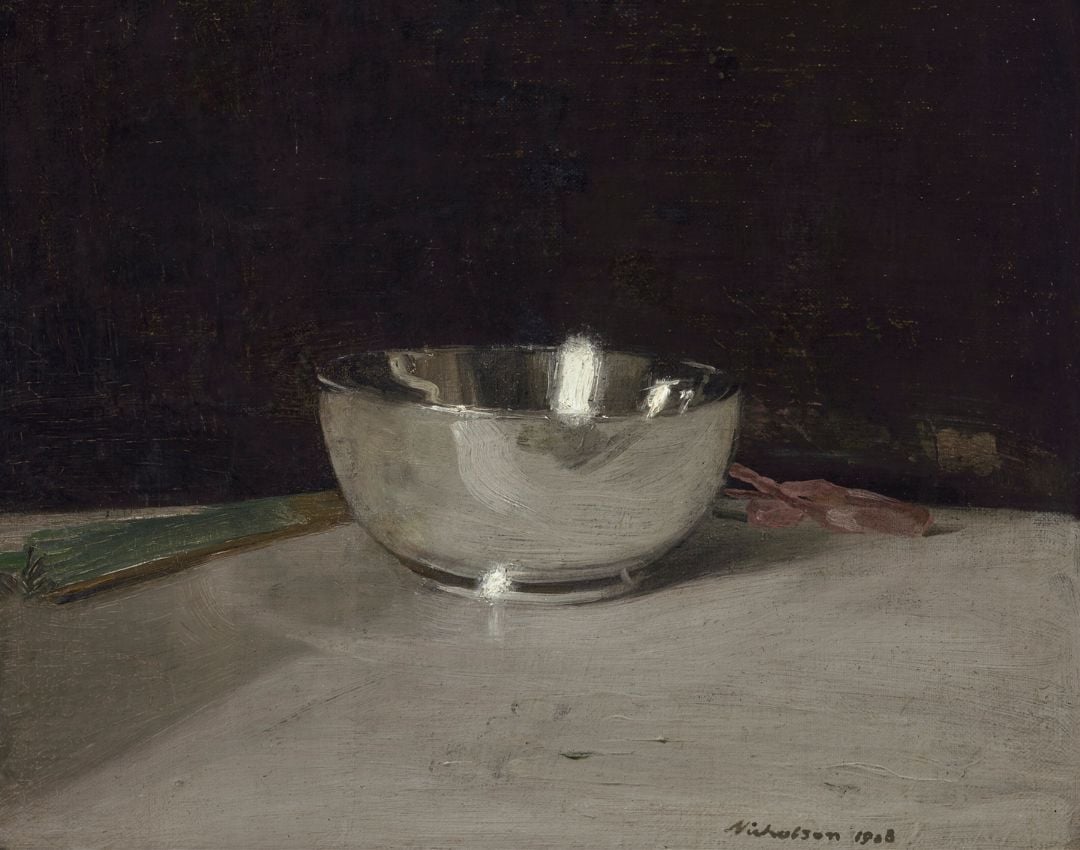

Some of the most important decisions you make for your painting happen before you even begin working on the canvas. Learning how to choose your painting subject matter is one of the biggest factors that determines whether a painting will succeed.
This can be a little uncomfortable to hear at first—but it’s important:
You should not choose your subject simply because you like the object.
This doesn’t mean you shouldn’t paint the things you love. On the contrary—learning how to truly see and evaluate a subject will free you up, sharpen your eye, and help you create paintings with more interest and depth. Let’s get started by looking beyond the object you wish to paint.
Look Beyond the Object
When choosing painting subject matter, you have to look past the subject as a “thing” and evaluate it in terms of the visual elements that actually make a painting work:
- Value
- Color
- Composition
- Edges
- Quality of light
These are what hold a painting together — not the object itself.
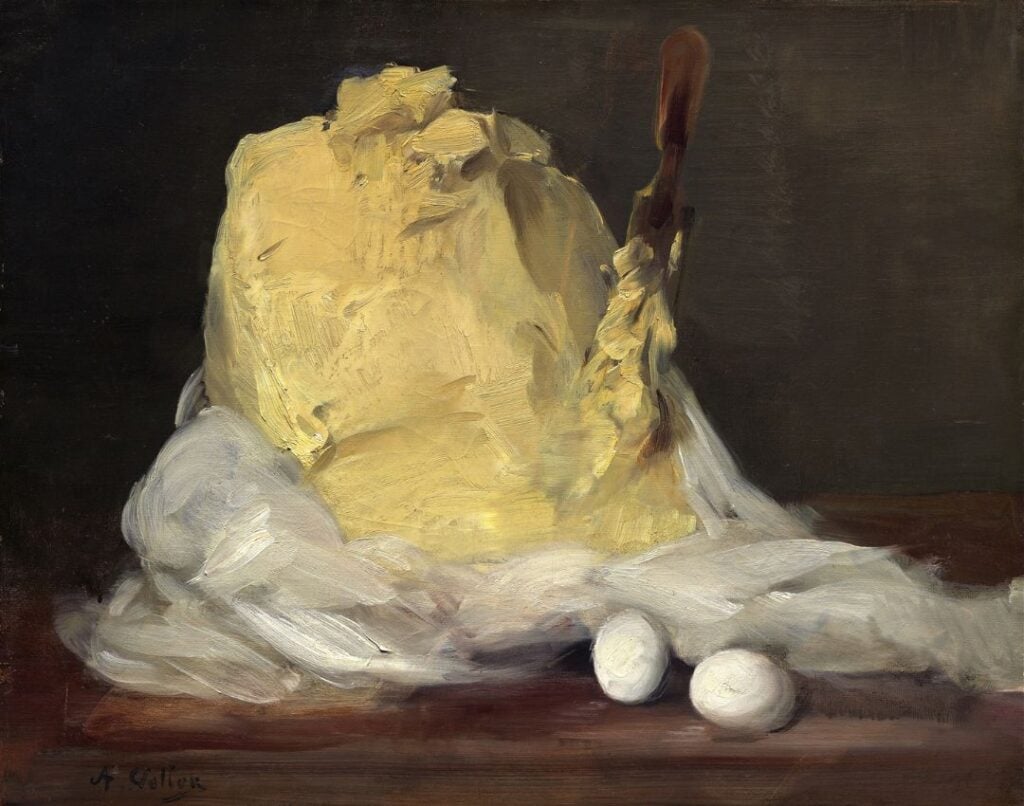
Think of Antoine Vollon’s painting of butter. No one looks at it and thinks, “Wow, butter is so fascinating.” We respond to the glow of light, the rich color, the energy of the brushwork. None of that has anything to do with the literal subject. It’s about how he saw it.
How to Choose Painting Subject Matter That Gives You Something to Paint
Your subject should give you opportunities to focus on the essentials — value, color, and edges.
If you’re painting a still life
Choose simple, strong lighting, ideally with a single light source. This creates clear value relationships and striking patterns of light and shadow, which give your painting power and structure.
How to choose a painting subject If you’re painting a landscape
Pay attention to how colors relate to one another. Is there a natural harmony? Are there color contrasts that become more interesting when placed side by side? Is the overall effect vibrant and compelling — or does it fall a little flat?
If something feels underwhelming, move. Shift your viewpoint. Rearrange your still life. You’re looking for the most compelling arrangement of light, dark, and color — not a specific object.
Practice Seeing Beyond the “Objects”
A powerful way to sharpen this way of seeing is to paint something that doesn’t immediately read as a clear, familiar object. When your brain isn’t busy labeling what it sees, you can finally observe the true relationships that make a painting work.

In my painting school, we spent a couple of weeks each year working from what we called the “junk pile.”
We would quite literally heap a chaotic assortment of unrelated items into the center of the room — boxes, scraps of fabric, wooden pieces, metal parts, anything with interesting shapes or textures. Then each student had to hunt for a small area that had compelling value shapes, color harmonies, and movement of light.
This practice was incredibly freeing. Because nothing in the pile was visually precious or emotionally meaningful, we were forced to focus solely on:
- Value patterns
- Color relationships
- Edges and transitions
- The abstract shapes created by light and shadow
We weren’t painting objects — we were painting visual relationships.
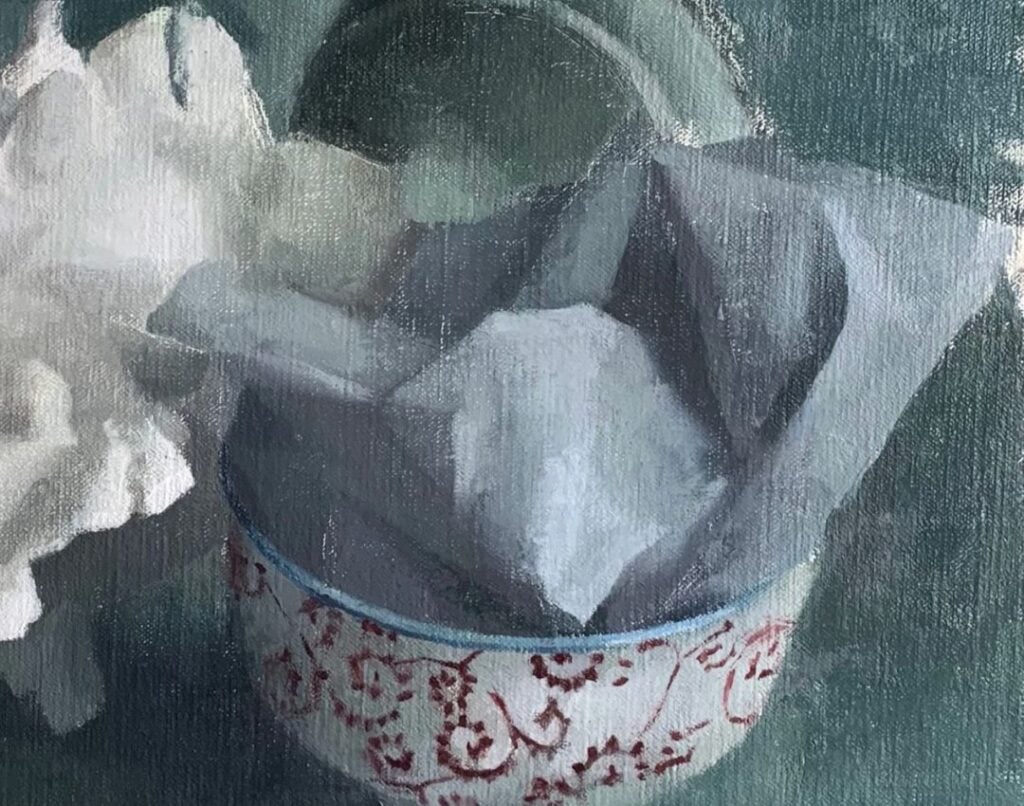
You can easily practice this at home. Build a small junk pile, or choose subjects where object identity melts away, such as:
- Crumpled or folded fabric
- Scrunched paper
- A tangle of cords or string
- A stack of boxes or books
These subjects remove the temptation to think in terms of “things,” and help you train your eye to see the world in terms of shape, color, and light — the true language of painting.
Your Job Is to Find the Most Compelling Vision — Not the Prettiest Thing
A painter’s job is to find the most interesting visual situation possible.
This means:
- Disregarding the literal identity of the object
- Focusing instead on value patterns, color harmonies, and the way light moves across forms
That is what you’re truly painting.
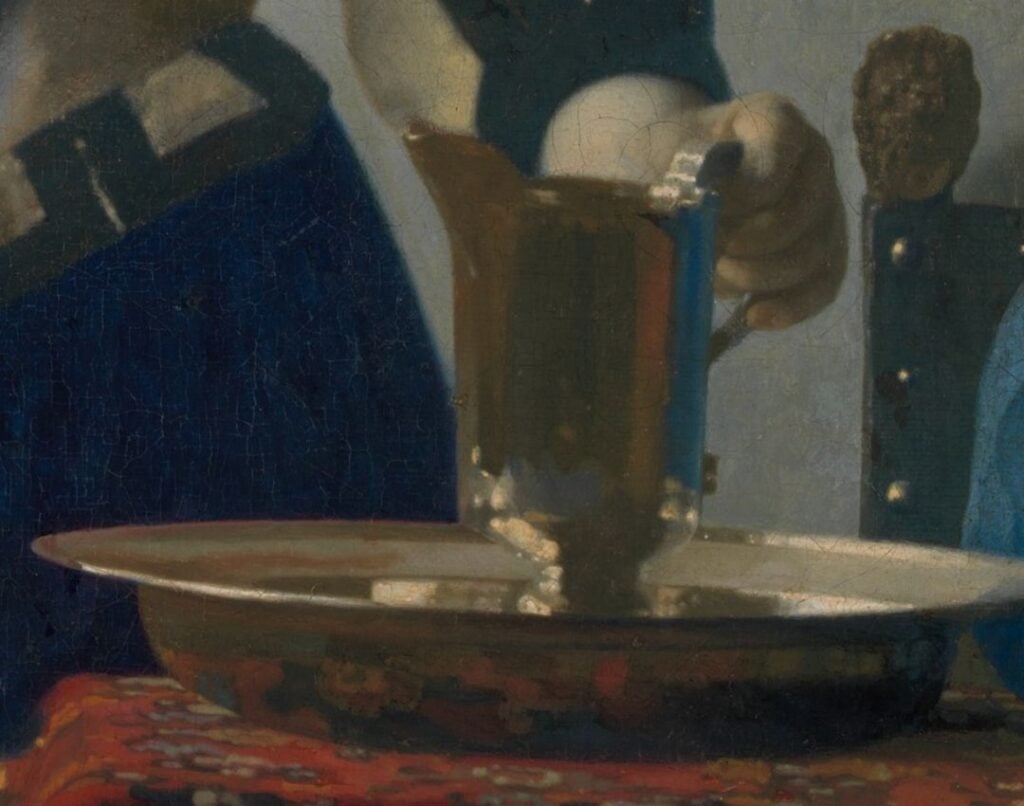
Training Your Eye to See Strong Painting Subject Matter
These concepts might feel unfamiliar at first, but the more you practice seeing in terms of light, dark, and color rather than “things,” the more sensitive and discerning your eye becomes.
You begin to experience the world differently:
- You see abstract value shapes rather than isolated objects
- You notice subtle color harmonies all around you
- You become more aware of how light actually behaves
As your vision shifts, your paintings begin to reflect a deeper, more truthful way of seeing — much like Vollon transformed a simple pat of butter into a luminous subject.
This is what painting is really about.



8 thoughts on “How to Choose Strong Subject Matter for Your Paintings”
I was once asked where from are coming my subjects and I could not give an answer so I tried to find the source for me. One answer was the trips because I enjoy the landscapes, but it is need to work a lot to try to draw them and I not make this thing happen so often I like. Your article set in order my questions and answer about subjects, it was a pleasure to read it.
Am really very glad to hear that Valentin! Thank you for sharing 🙏
As always, a very helpful post, thank you as your recommendations are helps me to expand the number of possibilities. Very helpful.
Mery Christmas, happy New Year many, many years of happy painting
Very glad to hear that Eduardo. Glad that this post is helpful!
Another very helpful article Elizabeth that I plan to guide my next painting. All these considerations really make painting so interesting and art appreciation much more reined
Thankyou and seasons greetings
Thank you Judith for your kind words! Glad that this article is helpful. Thank you so much for sharing!
I find your lessons to be very, very helpful. They make me think outside of my own little box. I get too fixed on subject matter, and now I see there’s more to choosing a painting subject than that.
Thank you.
I am so very glad to hear that Dennis – thank you for sharing!