
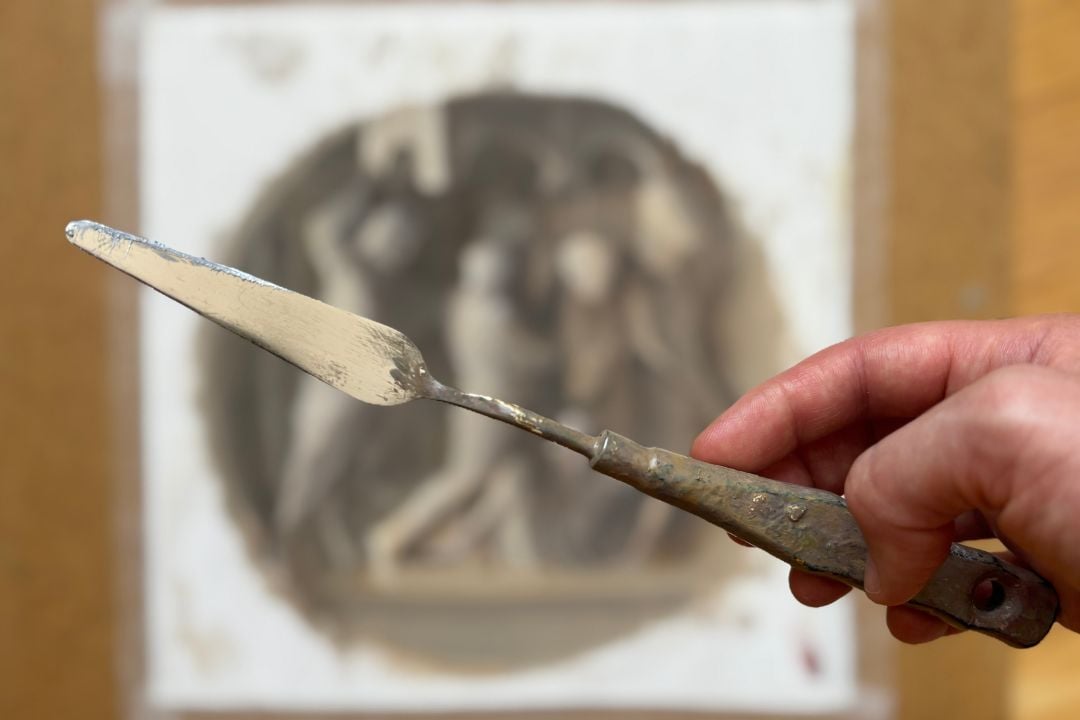

When most artists hear “palette knife painting,” they think of applying thick, textured strokes directly onto a canvas. While that is an approach that some people take, there is so much more to what a palette knife can do — beyond just adding paint.
In my practice, I don’t use a palette knife to apply paint at all. Instead, I rely on it as an essential tool for scraping away paint, softening and reinforcing edges, and even drawing and measuring on the canvas. Let’s explore these alternative palette knife techniques and how they can transform your painting process.
Using a Palette Knife to Scrape Away and Start Fresh
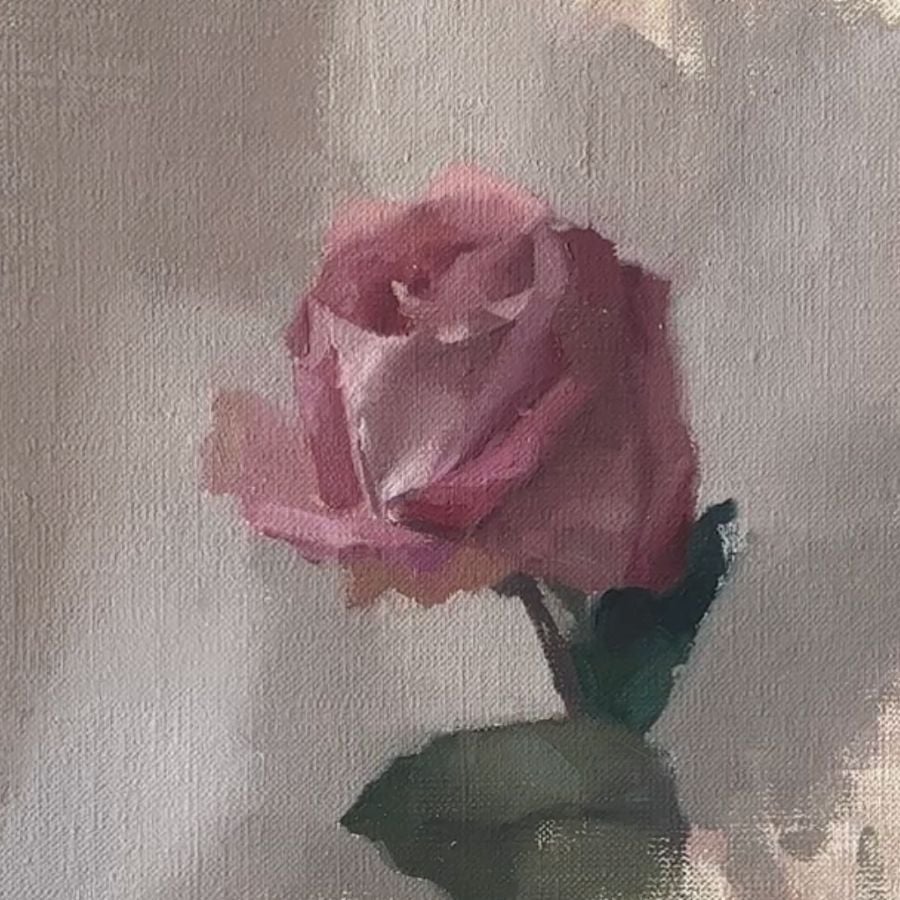
One of the most valuable uses of the palette knife is scraping away paint. Sometimes an area of a painting doesn’t feel quite right — maybe the value is off, the shape is incorrect, or the color harmony needs reworking.
By scraping away paint with a palette knife, you effectively give yourself a second chance. The beauty of this approach is that it leaves behind a subtle “ghost” image on the canvas. This ghost provides a faint guide to help you rebuild the passage with more confidence and accuracy. Of course, this only works well if your paint is still wet. You can scrape away dry paint to a certain degree, but it will not work as well as if it were wet.
In my own work, I’ve found that some of my best areas emerged only after I scraped them away and reworked them from this ghost layer. Palette knife painting isn’t just about adding — it’s about editing and improving.
Testing Values with a Palette Knife Before You Mix
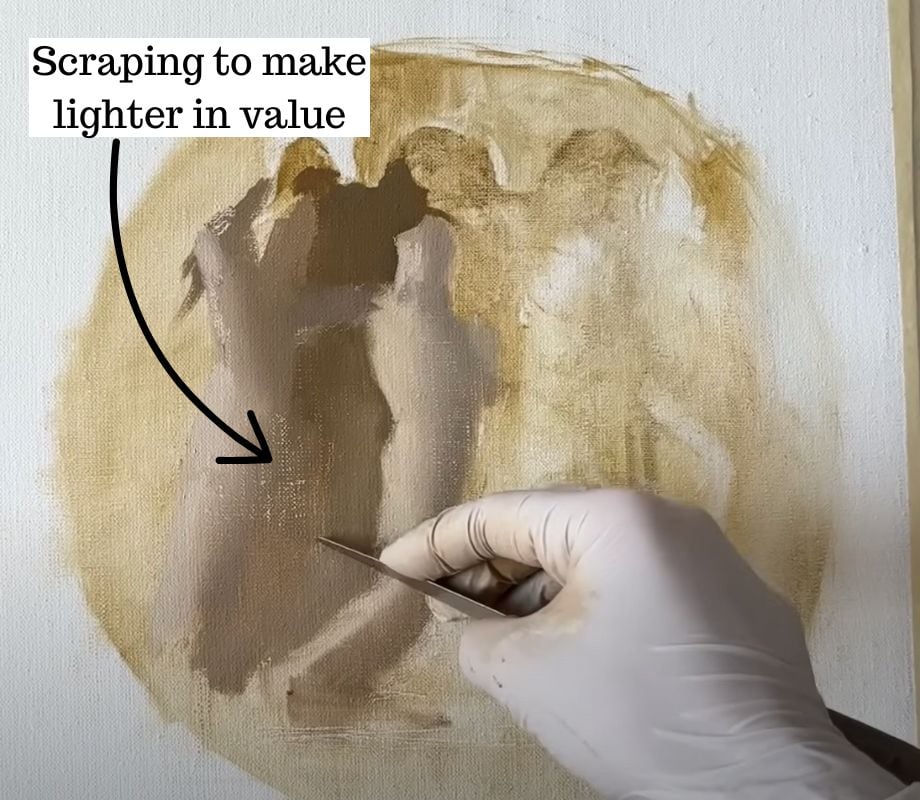
Another powerful technique in palette knife painting is using it to test values quickly.
When you scrape away paint, you reveal the white (or light-toned ground) of your canvas underneath, making that area appear lighter in value. This immediate lightening helps you see if a passage needs to be adjusted without spending time mixing new colors right away.
Once I’ve confirmed that an area should be lighter, I can mix a new color confidently, knowing I’m on the right track. This is an efficient way to check value relationships on the fly and avoid wasting paint.
Drawing and Measuring: Using the Palette Knife for Accuracy
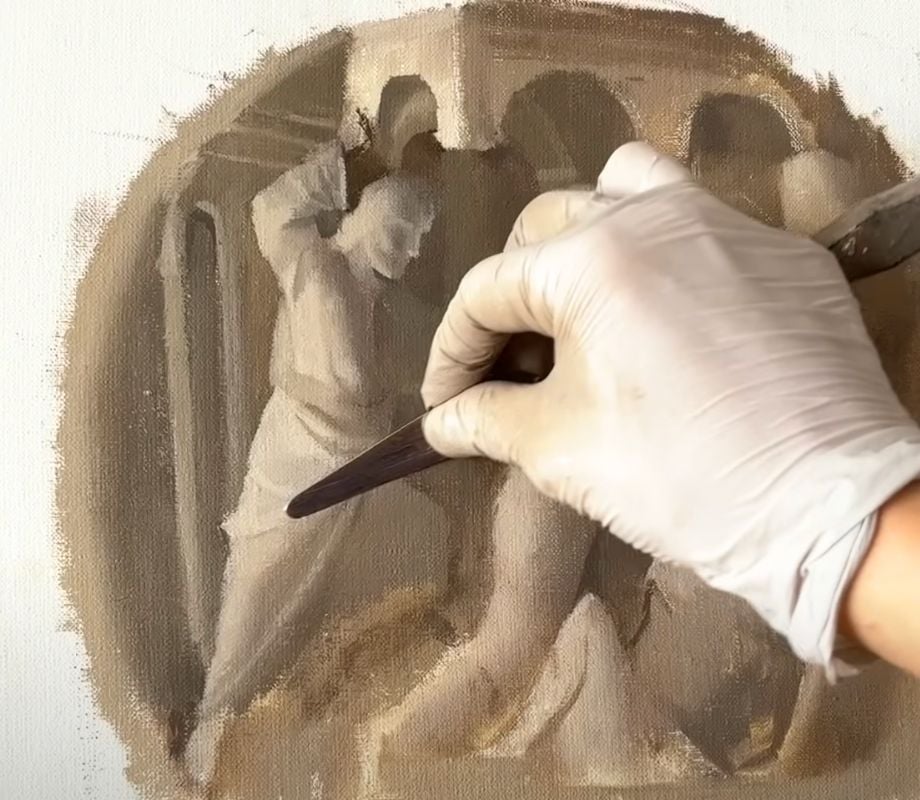
Did you know you can also “draw” with your palette knife?
The straight edge of the knife is perfect for lightly scoring lines into wet paint to help measure and block in shapes. You can check the geometry of your composition, ensure major shapes are correctly placed, and refine drawing errors early on.
By using the palette knife in this way, it becomes an extension of your eye and hand — a precise tool that keeps your overall structure solid before moving forward with painting details.
Softening and Reinforcing Edges with a Palette Knife
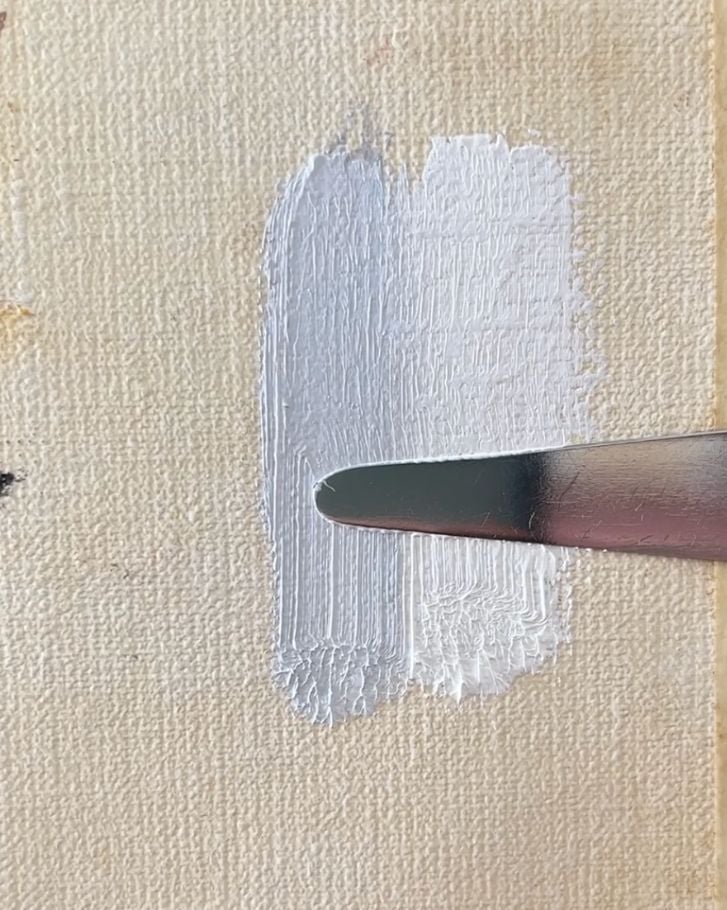
Edges are critical in creating depth and focus within a painting. One of the most subtle yet powerful aspects of palette knife painting is using it to adjust edges.
With the flat side of the knife, you can gently smudge paint to create soft, lost edges that suggest form without over-defining it. Soft edges create atmosphere and help guide the viewer’s eye to the more important areas.
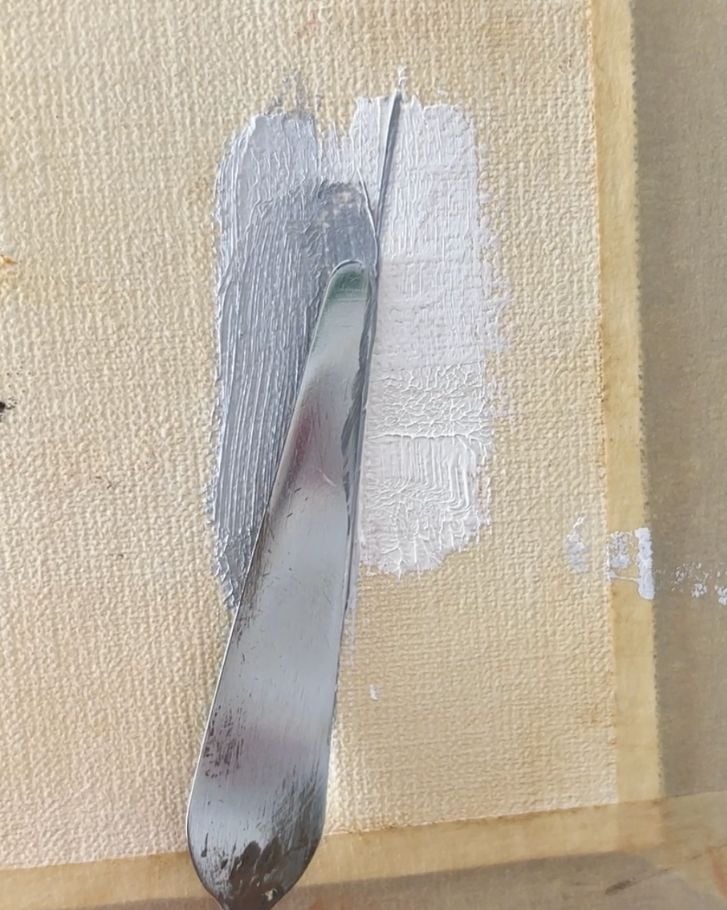
Conversely, the sharp edge of the palette knife can be used to reinforce hard edges. A crisp edge can instantly bring clarity and structure, emphasizing key focal points in your painting.
Using Palette Knife for More than Just Thick Strokes
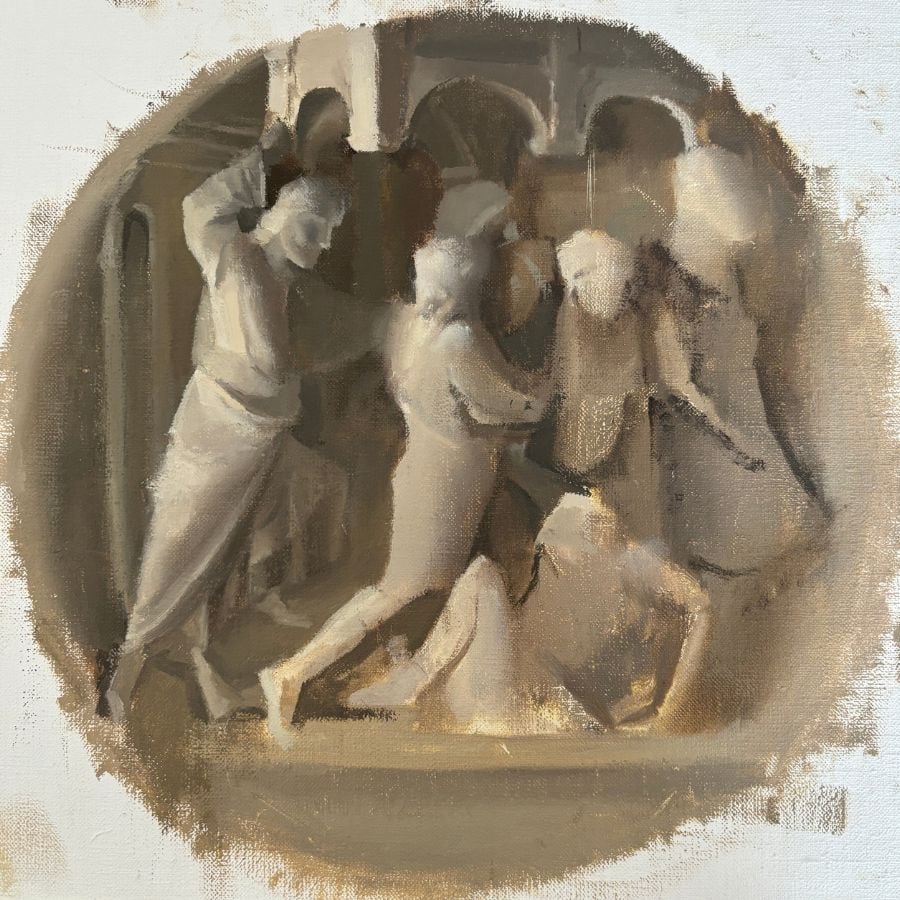
While many artists think of palette knife painting as purely an impasto technique, it can also be an invaluable tool for correction, exploration, and subtle refinement.
Whether scraping away paint to start fresh, testing value relationships, measuring and drawing, or carefully adjusting edges, the palette knife serves as a versatile companion throughout the painting process.
Palette Knife Recommendations
I use and own both of the following palette knives. The Liquitex version is a little bit stiffer (but stronger) but it becomes more flexible over time. Whereas the RGM is more flexible right from the start.
Blick RGM Palette Knife
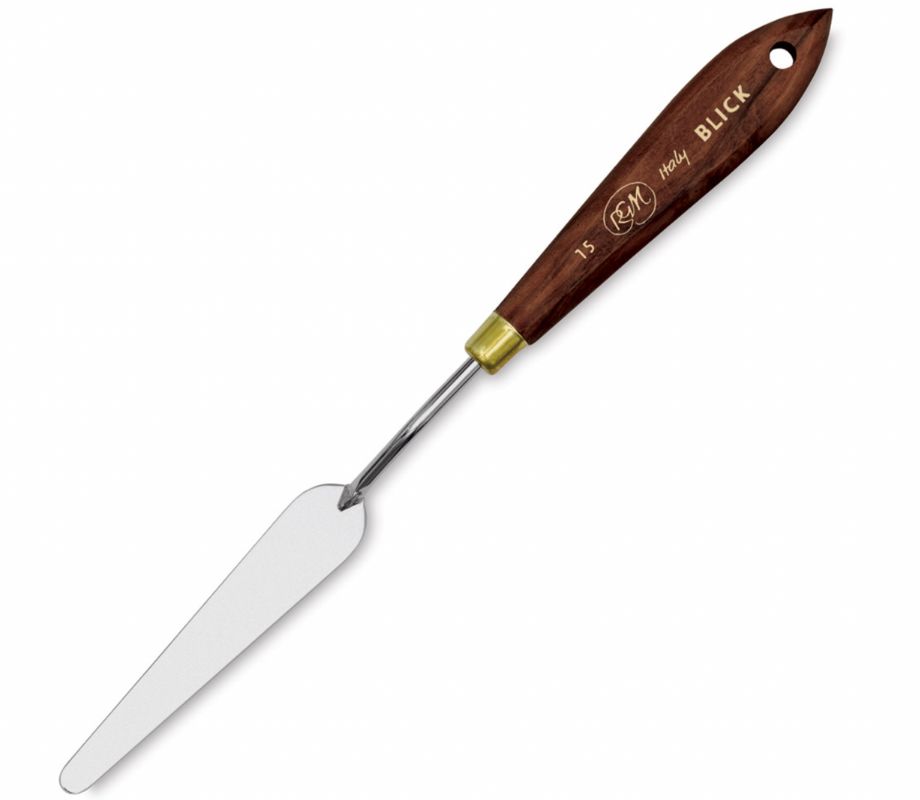
>>Get the RGM palette knife here
Liquitex Palette Knife
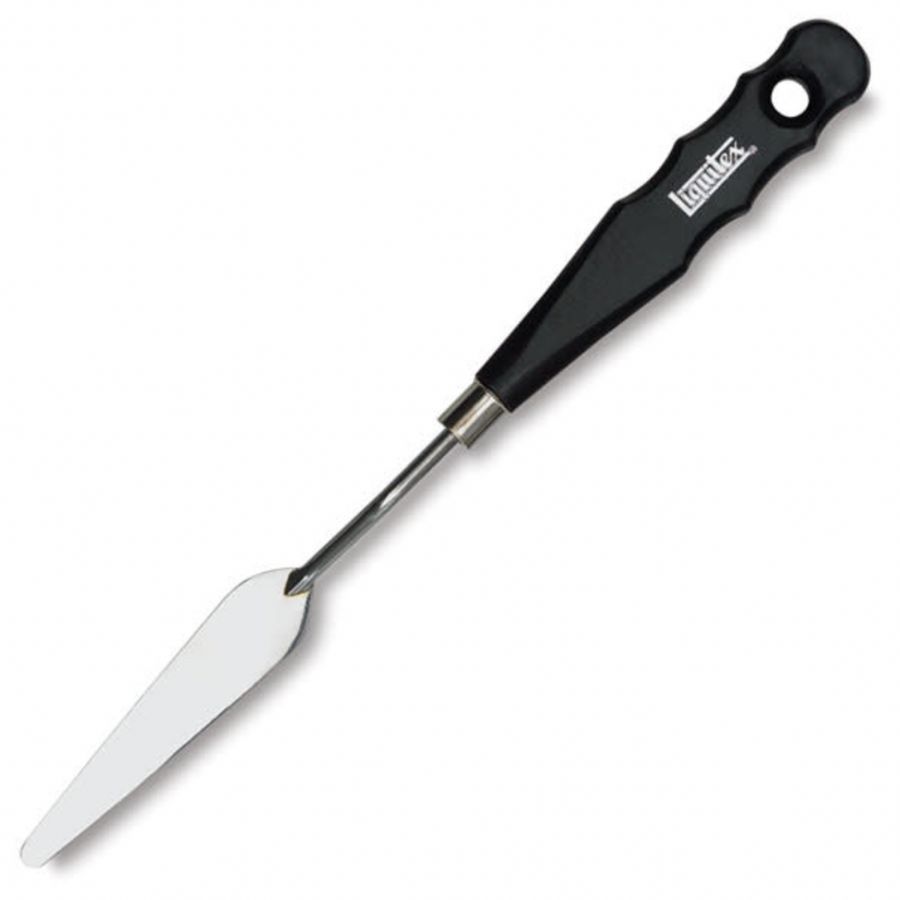
>>Get the Liquitex palette knife here
If you’ve only used your palette knife for mixing paint or applying thick layers, I encourage you to experiment with these other techniques. You might be surprised how much freedom and control they bring to your work—and how they help you paint with more confidence and expression.
Do you use a palette knife while you paint? If so, how do you use it? Let me know in the comments below!

12 thoughts on “How to Use a Palette Knife for Scraping, Drawing, Edges & More”
Thank you Elisabeth. I’ve used the palette knife for the same reasons which I developed over time out of necessity. Sometimes I make a mistake in a painting and wish there was an “undo” button like on a computer. The palette knife is the closest I have! I’ve used it for edges and drawing as well. I might explore applying paint with it again. So far that method didn’t give the result I’ve wanted, but I know it can with practice.
You are so welcome. I often wish I had an undo button for a painting… the more I work with computers the more my brain things there should be one! But yes, I agree the palette knife really is the closest thing to an undo button!
I started oil painting when I was 8 y/o. An artist mentored me, and she must have been a fan of palate knife painting, because I found an original painting I did that was with a pn. I did’t paint anymore until a few years ago, when I was finally retired. I find that I prefer palate knife painting to painting with brushes, because I can create more texture in a painting. Some of my better paintings are pn paintings. However, I appreciate all the other ways you use the pn to draw or distinguish values. I would like to see how you do different shapes using a palate knife.
Sue Pickeol
Thank you for sharing your experience with a palette knife! Glad that you enjoy using the palette knife. Personally I do not use the palette knife to create texture – but I know many that do and enjoy using that way! Very glad that you have found that you love using it.
Nice suggestions on palette knife use!
I’m basically self taught and when I first started out I took a 5 day course at Cape Cod School of Art and was forced to use a pn to define shapes-hated it then and now until read your suggestions which were great as they always are and will start using them more. Thanks for your teaching efforts and contributions to the art of teaching!
Question(s)?
Do you critique? Always useful especially bluntness. I’ve been painting 20+ years as a hobby and I am self taught and never really had anyone to critique my work. Would you be interested? If so what sort of renumeration would be fair for you. I’m 80+years of age with my own studio and do both water and oil and try and paint at least 1 to 2 hours 4 times a week.
Thank you! Glad you enjoyed the palette knife suggestions! That is wonderful that you took a course at Cape Cod School of Art. Charles Hawthorne founded that school in 1899 who taught my teacher’s teacher!
I do do critique – however I only do critiques inside my courses while students share their work. You are more than welcome to join one of my courses. You can check out the “courses” tab on my website here if you are interested. Appreciate your interest in getting critiques.
Thank you again. Loved the article. I do all these things also. Sometimes, I never pick up a brush. I have been painting since I was eight years old. I look forward to future articles
You are so welcome! Thank you for your kind words and glad you enjoyed the article. Thats awesome that you already do all of these things!
The palette knife explanation is very useful for me, as I saw in the foundational painting course for the first time I try to ever since. It gives me confidence. I hope I can paint on a regular base after holidays periods of this summer and use this lesson.
Glad this is very useful and that it gives confidence! Thank you for sharing Valentin. Also hope you will be able to paint more regularly coming up after holidays. It is definitely very helpful when one can get into a consistent painting practice! I look forward to seeing more of your work when you are able to get back to it more.
Thank you so much for sharing this. It was extremely enlightening for me.
I am so glad to hear that Joanne! Glad this was helpful – thank you for sharing that.