Get my Color Mixing Artist's Guide, with helpful tips for mixing colors you can start putting into practice right away!
Knowing when to stop painting is one of the most important—and most difficult—skills a painter can learn. I remember one of my teachers saying exactly that, and at the time it sounded simple. But as I experienced the pain of “ruining” paintings from working on them too much – I realized that knowing when to stop a painting isn’t quite as simple as it may seem.
There is such a thing as overworking a painting. I’ve done it more than once. And once you cross that line, there is often no easy way back—no undo button. Yet making that mistake is also part of how you learn. Over time, you begin to sense the narrow space between a painting that is finished and one that still genuinely needs more work.
That understanding doesn’t come all at once. It develops gradually, through practice, reflection, and—yes—through a few paintings that went too far. Below are several signs that can help you recognize when it may be time to step away and call a painting done.
When You No Longer Know How to Proceed
This Degas painting shows how far the artist stayed from overworking the piece. The whole work is very alive and you can tell that the artist was fully engaged with it.
If you reach a point where you truly don’t know what to do next, this is often a signal to put the brushes down.
Pushing forward blindly rarely helps a painting. When you don’t have a clear intention—when you’re just doing something to see what happens—you’re no longer painting with understanding. At that point, continued work usually subtracts rather than adds.
This is especially important while you are still learning and studying painting. In those years, it’s far more valuable to do alla primastudies than to worry about making fully resolved pictures.
Charles Hawthorne speaks directly to this in Hawthorne on Painting:
“Do studies, not pictures. Know when you are licked—start another.”
This beautifully vibrant work by Degas is a wonderful example of a study or “experiment”. Doing these kinds of paintings helps to keep you fresh and engaged with your work.
In other words, recognize the moment when you’ve gone beyond your current understanding. When that happens, the best move is often to stop, set the painting aside, and begin a new one. The learning happens in the repetition.
As you grow and develop, you will be able to push paintings further and work on them for longer periods without destroying them. Being able to bring a painting far—and still keep it alive—is a real marker of artistic maturity.
When You Lose Interest in the Painting
Unfinished portrait miniature of Oliver Cromwell by Samuel Cooper
Losing interest is another clear sign that it may be time to stop.
The moment your engagement fades is often the moment your work becomes mechanical. Brushstrokes turn repetitive. Decisions become safe or habitual. The painting starts to feel monotonous—because you are working in a monotonous way.
A painting can only feel fresh, alive, and interesting if the painter brings those same qualities to the process. When that energy is gone, continuing to refine usually leads to overworking rather than improvement.
Sometimes, stopping isn’t about giving up—it’s about preserving what’s already there.
When Refinement Stops Serving the Structure
Sometimes refinements can go too far and not serve the overall painting. Learn to recognize when this might happen in your own work. Once you see it, stop painting.
There comes a point when additional refinement no longer strengthens the underlying structure of the painting.
In the early stages, your job is to establish the big relationships—value groupings, color harmony, proportion, and overall visual hierarchy. These elements carry the painting. Refinement should support them, not compete with them.
If you notice that your later adjustments begin to weaken the original value structure, disrupt the color unity, or call attention to isolated details, it’s often a sign that you’ve gone far enough. At that point, continuing to refine may actually undo the clarity you worked so hard to establish.
When You Start Fixing the Same Area Repeatedly
Imagine if William Nicholson worked on one of the blooms of the flower over and over again – it would start to look out of place in the painting. It is best sometimes to scrape an area out and start over.
Repeatedly reworking the same passage is another strong indicator that it may be time to stop.
When painters get stuck endlessly adjusting one area, it’s often because the real issue lies elsewhere in the painting. Continuing to tinker rarely solves the problem—instead, it usually leads to muddiness, stiffness, or an area that feels overworked compared to the rest.
Learning to recognize this pattern can save many paintings. If an area has been touched too many times without improvement, it may be best to leave it alone—or step away entirely.
When the Painting Loses Its Sense of Life
Corot’s plein air sketches are beautiful examples of paintings that have a lot of life to them. Everything is very closely observed while not being overworked at the same time.
Many paintings fail not because they are unfinished, but because they are over-finished.
A painting can be structurally sound and still lose its sense of vitality if it is pushed too far. Excessive control can erase gesture, flatten subtle relationships, and remove the freshness that gave the painting its initial strength.
Some of the strongest paintings stop just short of full resolution. They leave room for the viewer’s eye and imagination—and preserve the sense of life that first brought the painting together.
When You’re Painting from Fear Instead of Clarity
Vermeer had an ultimate sense of clarity when it came to painting. It is good to be clear with yourself in regards to what you want to get out of your painting.
Overworking is often driven by fear rather than artistic necessity.
Fear of leaving something unresolved, fear of judgment, or fear that the painting isn’t “good enough” can push painters to keep working long after clarity has been lost. At that point, refinement becomes defensive rather than intentional.
Learning to stop from a place of clarity—rather than anxiety—is an important step toward maturity as a painter. Confidence grows when you learn to trust what the painting already communicates.
When Distance Improves the Painting
Degas didn’t take this portrait painting too far – he left it in a place where you could still see the bold brush strokes and rough texture of the paint. This doesn’t mean that you can’t take a painting much further without overworking it. It is just that for his purposes this painting was done.
Stepping back—both physically and mentally—can reveal more than continued refinement.
Often, a painting that feels unresolved in the moment becomes clear after a pause. Distance allows you to see the work as a whole again, rather than getting lost in isolated areas.
Many paintings benefit more from time and space than from immediate correction.
Learning to Trust “Enough”
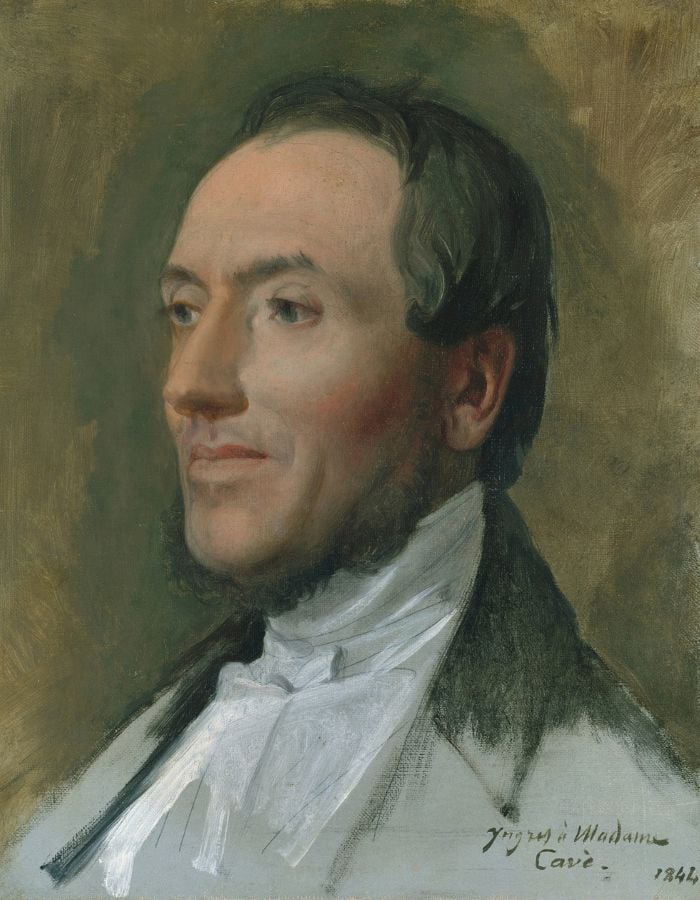
Ingres, Edmond Cavé. Ingres knew when to stop painting as seen here in this portrait.
Learning when a painting is finished is not about perfection. It’s about sensitivity—being able to sense when the essential relationships are in place and when further refinement would only dull them.
This judgment develops slowly, and it develops best when you allow yourself to stop before a painting is exhausted. Over time, you’ll begin to recognize that subtle but powerful moment when the painting says, enough.